
Conversational AI
100 Voice AI Tips for the Rest of 2026
100 production rules for AI voice agents based on real deployments: call scope, latency, speech recognition, tools, evals, handoff, safety, and operations.

After enough AI voice agent deployments, the same patterns keep showing up.
The teams that get value fastest get the operational details right: call scope, latency, speech recognition, tool access, handoff, safety, and the weekly review loop after launch.
That is where these 100 rules come from.
These are practical rules for the point where voice agents start handling real calls: callers pause mid-sentence, interrupt, change intent, sit in noisy rooms, wait on slow systems, and expect the agent to still finish the job.
The pressure to adopt AI in customer service is real: Gartner reports that 91% of customer service leaders feel pressure to implement AI in 2026. Adoption pressure creates urgency, but production readiness comes from harder questions: Can the voice agent complete the workflow, recover from messy audio, use the right tools, and hand off cleanly when it should?
That is the bar this list is written against.
Here are 100 voice AI tips for the rest of 2026.
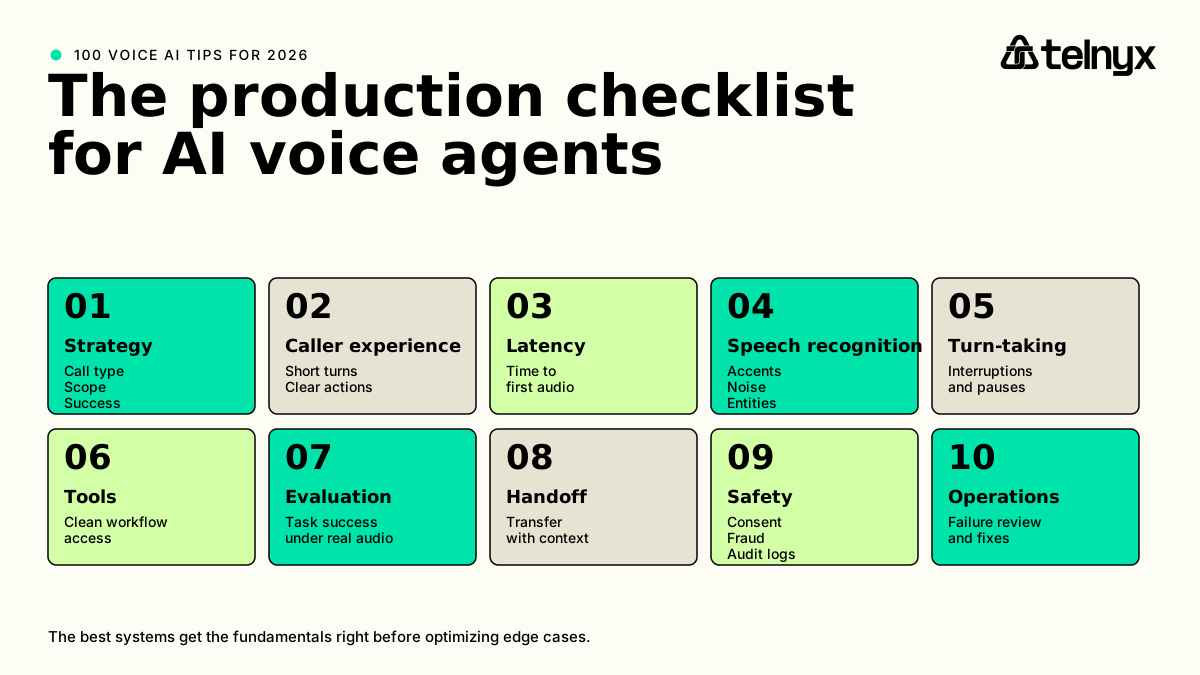
Voice AI strategy
- Start with one call type and make it work end to end.
- Pick a workflow with a clear outcome.
- Define success before choosing a vendor.
- Automate painful volume before rare edge cases.
- Start with a defined support motion before expanding scope.
- Choose calls where the agent can actually take action.
- Treat containment as one metric inside a larger quality system.
- Measure resolved calls as the primary outcome.
- Keep humans in the loop for risky workflows.
- Revisit call scope every month.
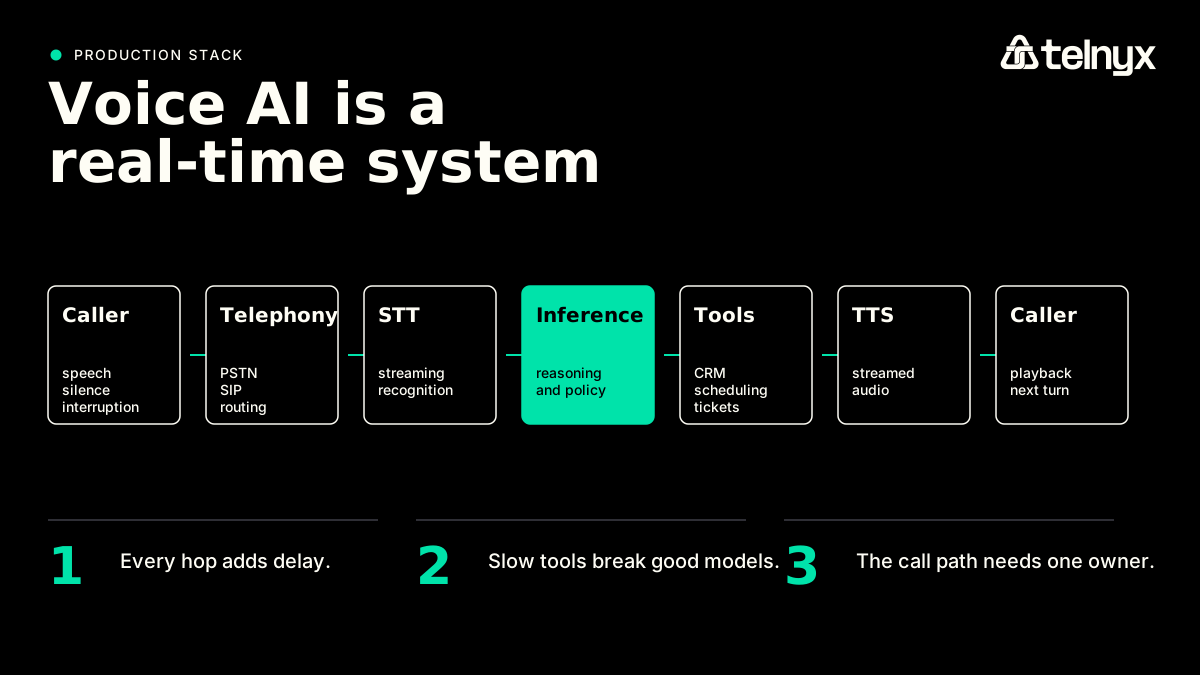
One pattern shows up quickly in real deployments: universal phone agents are usually weak phone agents. A billing call, appointment reschedule, lead qualification call, claims intake, password reset, and order status call all need different tools, policies, timing, and escalation paths. That shows up fast in healthcare scheduling and retail order status calls.
Narrow scope is how production systems get good.
Caller experience
- Open with the caller context the system already has.
- Ask one question at a time.
- Keep responses short.
- Confirm before taking action.
- Use known information before asking the caller for it again.
- Let callers interrupt.
- Treat silence carefully.
- Escalation should feel like a normal path in the experience.
- The agent should know when to stop talking.
- Useful beats human-like.
Timing changes everything in AI voice agents.
A caller can feel when an agent responds too slowly, cuts them off, or asks a question that ignores what they already said. The best agents are the ones that move the call forward without creating friction.
Latency
- Measure time to first audio.
- Measure full turn latency.
- Track p50, p95, and worst-case turns.
- Streaming speech-to-text is table stakes.
- Streaming text-to-speech is table stakes.
- Slow CRM calls ruin good models.
- Cache caller context before the agent needs it.
- Keep slow tools out of the hot path.
- Test on PSTN as well as browser audio.
- Every vendor hop needs to earn its place.
In voice, latency is the product.
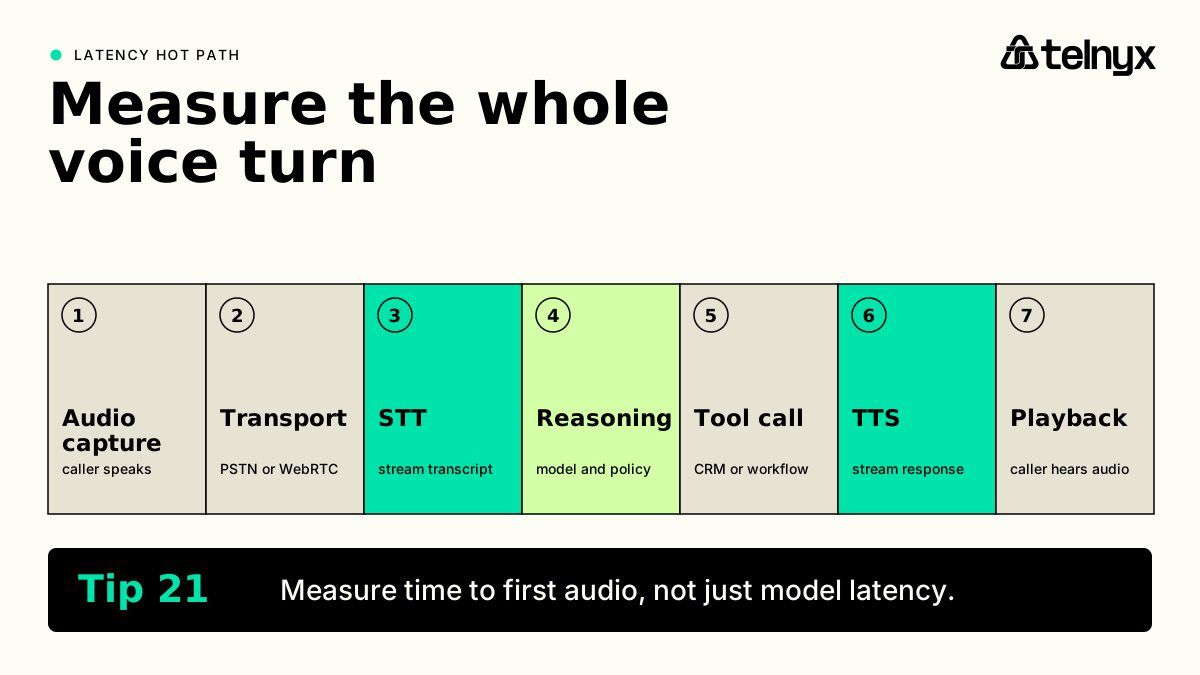
A recent enterprise realtime voice agent tutorial showed how much the full audio pipeline affects time to first audio. A voice turn includes telephony transport, speech-to-text, reasoning, tool calls, text-to-speech, and playback. Any layer can make the whole agent feel slow.
This is why voice AI infrastructure matters. Telnyx builds voice AI infrastructure from the communications layer up, with Inference, Speech to Text, Text to Speech, and SIP Trunking designed to fit inside real-time communication workflows.
Speech recognition
- Word error rate gives an incomplete picture.
- Test with accents.
- Test with background noise.
- Test with bad phone connections.
- Test with overlapping speech.
- Test with callers who change their mind.
- Use domain vocabulary in evaluation.
- Track entity capture separately.
- Measure correction recovery.
- Never assume clean audio represents production.
A transcript can look mostly right and still fail the call.
If the agent misses the appointment time, account number, medication name, order ID, or address, the task may fail even if the word error rate looks acceptable. For AI voice agents, entity accuracy and task completion matter more than transcript beauty.
Voice and turn-taking
- Natural voices cannot rescue bad flow.
- Tune interruption handling early.
- Backchannels should be rare and intentional.
- The agent should pause when the caller is thinking.
- The agent should recover when it gets interrupted.
- Use short turns instead of long monologues.
- Keep answers skimmable by ear.
- Match voice personality to call type.
- Use empathy only when the situation calls for it.
- Clarity beats charm.
One of the hardest parts of voice AI is listening at the right time.
Humans pause mid-thought. They restart sentences. They interrupt themselves. They talk over the agent. A production agent needs turn-taking logic that handles this without making the caller feel like they are fighting the system.
Tools and workflows
- A voice agent without tools is a talking FAQ.
- Give the agent one source of truth.
- Keep tool responses short and structured.
- Confirm before write actions.
- Log every tool call.
- Version prompts and tool schemas together.
- Keep workflow states constrained to real system states.
- Separate read actions from write actions.
- Measure tool latency separately.
- Broken integrations sound like bad AI.
The value of a voice agent appears when it can do something: check an order, schedule an appointment, qualify a lead, update a record, create a ticket, process a return, or summarize the call for a human. That is the same reason AI Missions exists as an orchestration layer for agentic workflows.
But tools also create risk. A confident agent with messy tool access is worse than a limited agent with clean workflow rules.
Evaluation
- Evaluate task success.
- Evaluate time to first audio.
- Evaluate interruption recovery.
- Evaluate hallucination under noise.
- Evaluate handoff quality.
- Evaluate tool-call correctness.
- Evaluate policy compliance.
- Replay real calls before launch.
- Build eval sets by call type.
- Run evals on every prompt and model change.
The tau-Voice benchmark makes the production gap obvious. Voice agents perform much worse when evaluated with realistic audio environments, accents, and turn-taking dynamics than they do in clean text settings.
That should change how teams launch. Build a replayable eval set that sounds like your actual callers, including noise, interruptions, accents, and incomplete information.
Human handoff
- Handoff is a product feature.
- The agent should know when confidence is low.
- Make escalation visible and easy to reach.
- Transfer with context.
- Send the human a summary before pickup.
- Include attempted steps in the handoff.
- Preserve caller identity and call reason.
- Track failed handoffs.
- Review escalated calls weekly.
- A contained bad call is worse than a clean handoff.
Voice AI should know which calls it can resolve.
Some calls are too emotional, too risky, too ambiguous, or too valuable for full automation. Good systems resolve the calls the agent can handle and make the human path better when escalation is needed.
Safety and compliance
- Disclose AI where required.
- Follow recording consent rules.
- Redact sensitive data.
- Limit what the agent can change without confirmation.
- Require stronger checks for high-risk actions.
- Monitor unusual call patterns.
- Keep audit logs.
- Review failed calls for policy drift.
- Treat synthetic voice fraud as operational risk.
- Safety cannot live only in the prompt.
Voice is a high-trust channel. That is exactly why it is risky.
Voice cloning, spoofing, and automated fraud attempts are now cheap enough to matter. The safest systems use permissions, policy checks, monitoring, and escalation rules around the agent.
Operations
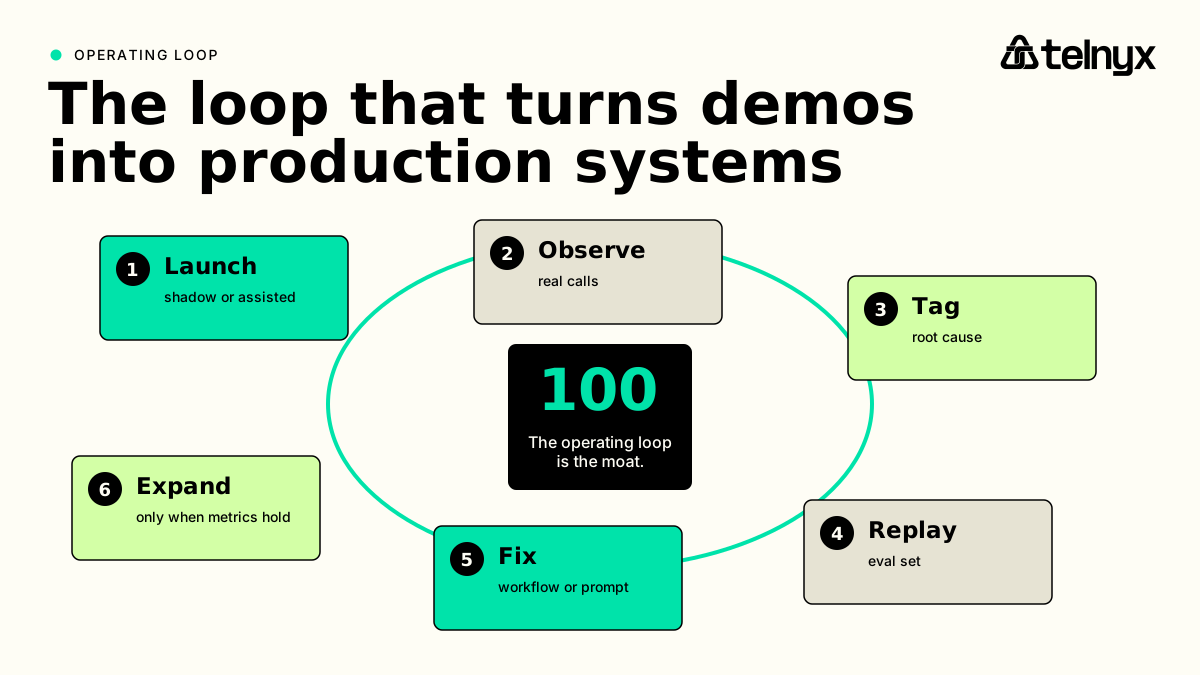
- Launch in shadow mode first.
- Move to assisted mode before full automation.
- Roll out one call type at a time.
- Review failed calls daily.
- Tag failures by root cause.
- Separate model failures from workflow failures.
- Separate latency failures from data failures.
- Fix the system before rewriting the prompt.
- Expand only when metrics hold.
- The operating loop is the moat.
Most teams over-focus on the model.
The better teams build the loop: call review, failure taxonomy, replay evals, prompt updates, tool fixes, latency fixes, escalation tuning, and weekly measurement. That loop is what turns a launch into a production system. For a broader architecture view, see our guide to building great AI voice agents.
The meta-rule behind all 100
Most voice AI problems are system problems.
The team with the clearest call scope, fastest real-time stack, cleanest integrations, strongest evals, and best operating loop wins.
The prettiest voice loses when the system behind it breaks.
Start with 10 fundamentals at full health, then layer the other 90 optimizations on top.
Get the fundamentals right and the other 90 start to make sense.
Share on Social


%20(1).png?width=96&format=webp)


