
Telnyx
Best voice AI agents for insurance in 2026
Discover the leading Voice AI Agents advancing insurance customer support, with fast, secure integration.

By Eli Mogul
Quick answer
For most insurance teams running production claim, renewal, and authentication workflows, Telnyx's voice AI agents platform is the strongest fit, Tier 1 carrier network, STIR/SHAKEN A-attestation on eligible traffic, HIPAA-eligible BAA coverage, and sub-second end-to-end latency on a single platform. The full ranking and tradeoffs follow.
The best voice AI agents for insurance in 2026, ranked on three production criteria insurance teams require: STIR/SHAKEN A-attestation call identity, single-vendor accountability, and latency low enough to keep policyholders from hanging up.
- Telnyx. Carrier-owned voice network, A-attestation on eligible traffic, integrated STT/TTS/LLM, HIPAA-eligible. Best for production claims FNOL, policy servicing, renewals, and support at scale.
- Liberate. Pre-built insurance flows out of the box. Tradeoff: limited flexibility outside insurance.
- Cognigy. Mature CCaaS replacement with insurance reference customers. Tradeoff: longer implementation, higher floor.
- Retell AI. Strong production track record for voice agent orchestration. Tradeoff: bring your own LLM and carrier integration.
- Vapi. Quick developer-first orchestration. Tradeoff: stack lives across multiple vendors.
- Voiceflow. Visual no-code builder with broad channel support. Tradeoff: limited voice depth.
- Synthflow. Quickest no-code voice POC. Tradeoff: limited enterprise compliance posture.
One shift worth flagging before you compare vendors: increasingly, the buyer evaluating insurance voice AI isn't just the CIO. It's also the agents inside the carrier (claims-triage agents, payer-coordination agents, policy-servicing agents) that will increasingly call other agents on the other side. The platforms that win the next five years are the ones that handle agent-to-agent calls with the same carrier-grade identity they handle human-to-agent calls.
Why insurance teams are deploying voice AI in 2026
Insurance call volume is rising while staffing is falling. The industry could lose around 400,000 workers through attrition by 2026, and account manager roles now take over six months to fill, up from 60 to 90 days. Catastrophe events compound the gap: FNOL volume spikes multifold, and call centers cannot hire fast enough to absorb it.
Voice AI changes the math on call capacity. A McKinsey survey found that 71% of firms were using generative AI tools by early 2025, up from 33% two years earlier, and McKinsey estimates generative AI could create $50 billion to $70 billion in insurance industry revenue, with the largest gains in customer operations.
The 2026 question is not whether to deploy voice AI for insurance. It's which platform survives production load. Claim FNOL callbacks, renewal reminders, authentication, and policy servicing all run on infrastructure that has to clear three bars: verified caller ID at A-attestation, one accountable vendor when something goes wrong on a recorded call, and latency low enough that a stressed policyholder does not hang up.
How we evaluated these voice AI platforms for insurance
This evaluation ranks platforms on four criteria that determine whether AI voice agents for insurance hold up in production.
STIR/SHAKEN A-attestation
STIR/SHAKEN is the FCC framework that lets carriers cryptographically sign outbound calls so receiving networks can verify the caller. The FCC mandated implementation in IP networks by June 30, 2021, and carriers now sign every outbound call at one of three attestation levels.
A-level attestation requires the originating provider to (1) be responsible for putting the call on the IP network, (2) have a direct authentication relationship with the customer, and (3) confirm the customer has a legitimate right to use the number (FCC, 2025). Calls signed at A land as verified caller ID. Calls at B, C, or unsigned are more likely to be labeled "Spam Likely" or blocked by receiving-network analytics.
For insurance workflows like claim FNOL callbacks, policy renewal reminders, and customer authentication, that delivery difference shows up directly in pickup rates and DOI contact-attempt documentation. Contact rates across industries have dropped around 40% due to labeling and blocking, with roughly 1 in 4 legitimate numbers at risk of being flagged.
A-attestation is weighted heavily here because most voice AI platforms can't sign at A directly. They route through a CPaaS that controls the attestation, and typically achieve only B. A-attestation comes from being the originating carrier, not from integrating with one. Telnyx is a Tier 1 carrier with FCC-registered Service Provider credentials , which is why it can sign eligible traffic at A on numbers customers own, meaning Telnyx has verified the caller and the caller's right to use the number.
Single-vendor accountability
A production insurance call typically touches four vendors: orchestration, LLM, STT/TTS, and carrier. This is the Frankenstack: telephony vendor, STT, LLM, TTS, and an orchestration layer, each one a vendor boundary, a margin layer, and a separate dashboard to debug. It works in demos. It fails in production audits.
When a policyholder disputes what a bot said on a recorded claim call, the audit trail crosses all four vendors. So does the SLA.
Insurance is a regulated workflow. State DOI contact-attempt rules established under NAIC model regulations, HIPAA records for health-insurance calls, and CPNI requirements for telephony each require defensible audit logs. Multi-vendor stacks create gaps. Each vendor logs its own slice, timestamps drift, and when the regulator asks who said what at 2:43 PM, the answer takes weeks to assemble.
Single-vendor stacks compress the audit trail into one system of record. One contract, one SLA, one log file. In Telnyx's experience supporting insurance customers, disputes on recorded calls are routine, and integrated stacks typically resolve them in hours rather than weeks.
Sub-second end-to-end latency
Voice AI conversations fail when latency exceeds the conversational threshold. Natural human conversation runs at 200 to 300ms turn-taking, the response window humans use with each other. Production voice AI should target sub-300ms end-to-end and treat 800ms as the failure point, not the goal. Above 500ms, callers start to perceive awkwardness. Above 800ms, they hang up. The classic HCI research on this dates back to Jakob Nielsen's response-time thresholds: 0.1 seconds for immediacy, 1 second for continuity of thought, 10 seconds for loss of attention.
End-to-end voice AI latency includes transcription, LLM inference, TTS generation, and network round-trip. Each hop adds time. Platforms that wrap third-party APIs add 200 to 400ms per hop. Multiply by three or four vendors and the response slips past the threshold before the model even runs. Speed of light in fiber is roughly 5ms per 1,000km. Architecture wins.
Telnyx co-locates LLM inference with voice infrastructure in 7 global PoPs , keeping the round trip inside one network. Competitors that orchestrate across clouds and carriers cannot match this without rebuilding their stack.
Compliance posture
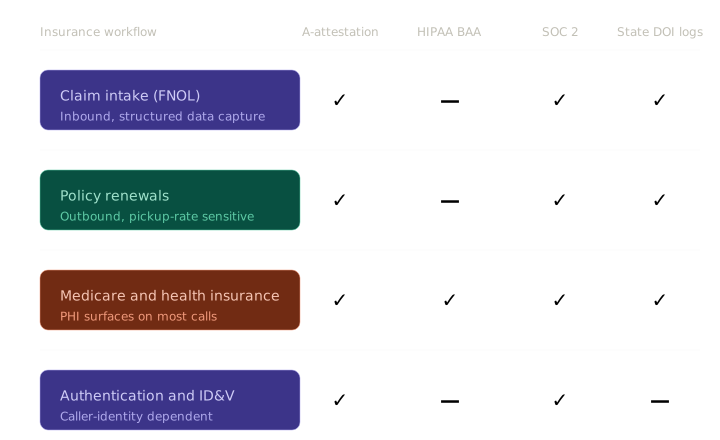
Insurance voice AI carries four distinct compliance burdens. HIPAA applies to health insurance, Medicare supplement, and any call where Protected Health Information surfaces, with HHS requiring a Business Associate Agreement between covered entities and any vendor that creates, receives, maintains, or transmits PHI. SOC 2 covers the data-handling controls auditors expect for policyholder PII. GDPR governs EU policyholder data. State DOI rules require defensible contact-attempt logs.
International carriers face additional layers: IRDAI in India, FCA in the UK, and local data residency rules across APAC and LATAM. Voice AI platforms that route through a single US-based carrier cannot satisfy these. Telnyx holds telecom licenses in 40+ countries , including jurisdictions where IRDAI, FCA, and APAC data residency apply , which lets insurance carriers run voice AI in-region rather than routing through US infrastructure.
Each vendor's publicly documented compliance posture is noted below. "Not publicly documented" appears where the vendor declines to publish a position. That gap is itself a signal for buyers in regulated workflows.
1. Telnyx
Telnyx is carrier-owned voice AI for production insurance workflows. Telnyx's Voice AI integrates STT, LLM hosting, and TTS on the same carrier network that owns the calling number, eliminating the 200 to 400ms inter-vendor latency typical of orchestration-layer competitors. Telnyx is a Tier 1 carrier with FCC-registered Service Provider credentials , which means it can sign eligible traffic at A-attestation on customer-owned numbers directly. The full stack runs on one platform: voice API, STT, TTS, LLM hosting, and the underlying telephony network.
Best for: Mid-market and enterprise insurance carriers running production claim, renewal, and authentication workflows that require verified caller ID, single-vendor accountability, and HIPAA-eligible infrastructure.
Strengths:
- Tier 1 carrier with FCC-registered Service Provider credentials , capable of STIR/SHAKEN A-attestation on eligible traffic for customer-owned numbers (see STIR/SHAKEN for AI agents)
- HIPAA-eligible voice infrastructure with BAA coverage for health-insurance and Medicare workflows
- 7 global PoPs with co-located GPU inference for sub-second end-to-end latency
- Integrated STT, TTS, LLM hosting, and telephony on one platform. One contract, one SLA, one audit log
Limitations:
- Developer-led implementation. Pre-built insurance flow templates are not the primary product positioning
- Best fit for teams that want control of the stack rather than a turnkey insurance vertical solution
Insurance use cases:
- Claim intake (FNOL): 24/7 inbound intake with structured data capture into the claims management system, reducing the 99-second average speed-to-answer that ContactBabel's 2025 contact center research found in industry data
- Policy renewals and authentication: Verified caller ID at A-attestation lifts pickup rates on outbound renewal and authentication calls
- Health insurance and payer call automation: HIPAA-eligible BAA coverage supports Medicare Advantage, supplement, and payer call flows (see HIPAA-compliant conversational AI for healthcare)
Compliance posture: STIR/SHAKEN A-attestation on eligible traffic. HIPAA-eligible with BAA. SOC 2 Type II. ISO 27001 . GDPR. Telecom licenses in 40+ countries .
Pricing: Voice AI from $0.05 per minute for orchestration, with STT and Telnyx-native TTS included; LLM billed separately. Voice API at carrier wholesale rates. The pricing is structural rather than promotional: Telnyx TTS runs roughly 10x cheaper than ElevenLabs and SIP minutes roughly 2x cheaper than Twilio , because every layer of the stack is owned rather than resold.
2. Retell AI
Retell AI is an enterprise-ready voice agent orchestration platform with a strong production track record. Vendor-published benchmark testing places their median latency around 780ms , which is consistent with orchestration over third-party providers. They market HIPAA-compliance options for healthcare and insurance customers.
Best for: Engineering teams that want to bring their own LLM and carrier, and need a production-grade orchestration layer with reliability guarantees.
Strengths:
- 99.99% uptime target with automatic failover across LLM and TTS providers
- Sub-one-second median latency in vendor-published benchmarks
- Mature SDK and webhook ecosystem for custom integrations
- Multi-turn conversation handling with real-time sentiment monitoring
Limitations:
- Orchestration only. Customers bring their own LLM, often their own carrier, and integrate STT/TTS via third parties
- STIR/SHAKEN attestation depends on the underlying carrier the customer brings, not on Retell directly
- Insurance-specific templates are not pre-built. Workflows are configured per customer
Insurance use cases:
- Lead qualification and quote intake automation
- Policy renewal reminders and outbound payment collection
- Claims documentation gathering on inbound calls
Compliance posture: HIPAA-compliance options documented per vendor materials . STIR/SHAKEN attestation dependent on carrier. SOC 2 documented per vendor materials .
Pricing: Starts at $0.07 per minute . Enterprise plans with volume discounts.
3. Cognigy
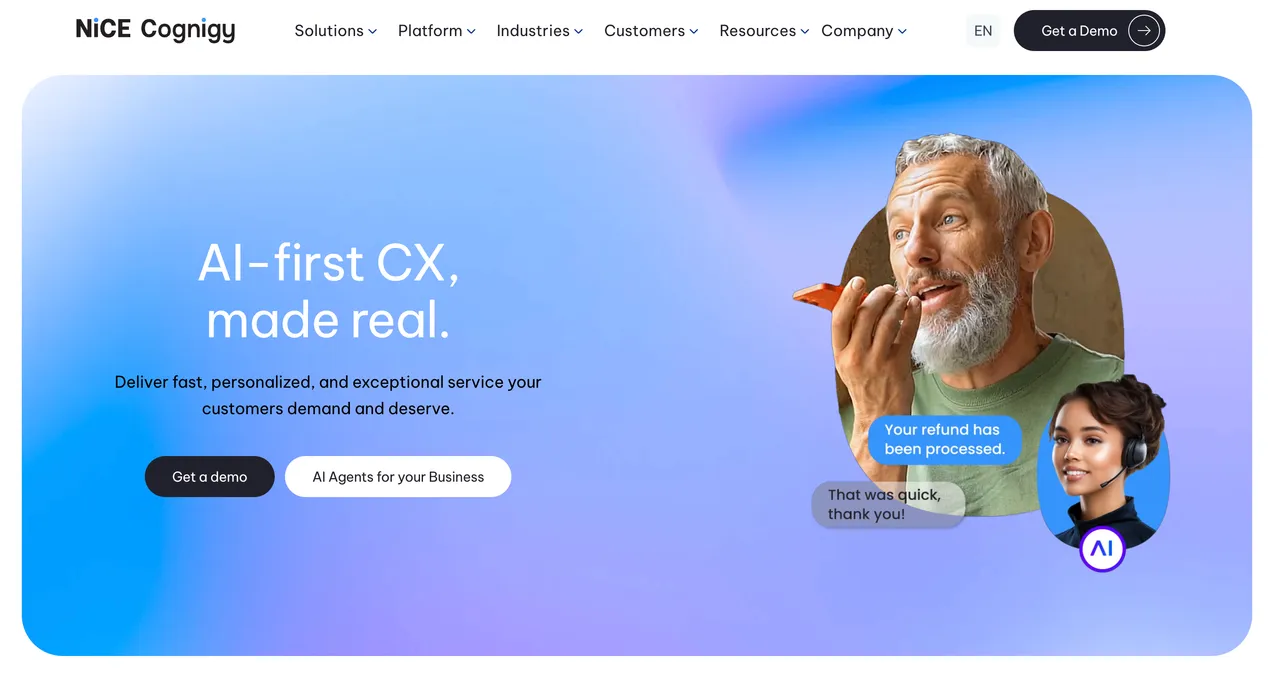
Cognigy is an enterprise contact center automation platform with deep integrations into Avaya, Amazon Connect, Genesys, and other enterprise contact center systems. It is positioned at large insurers replacing legacy IVR or augmenting a fully staffed contact center.
Best for: Large insurers with existing CCaaS infrastructure that need an enterprise-scale conversational AI layer with reference customer proof.
Strengths:
- Visual flow builder supporting complex multi-step conversation logic
- Native integration with major contact center platforms
- Insurance reference customers including Fortune 500 carriers handling millions of yearly calls
- Cognigy Insights analytics suite tracking automation rates and intent success
Limitations:
- Long implementation cycles. Requires coordination across IT, operations, and contact center vendors
- Higher floor on pricing and minimum contract size
- Built for high-volume contact center replacement, not quick pilots
Insurance use cases:
- Scaling customer support teams across multi-language operations
- Policy servicing and changes through visual flow design
- IVR replacement and identity and verification (ID&V) automation
Compliance posture: SOC 2 documented per vendor materials . GDPR documented per vendor materials. STIR/SHAKEN attestation is not publicly documented and depends on carrier integration.
Pricing: Custom enterprise pricing only.
4. Liberate
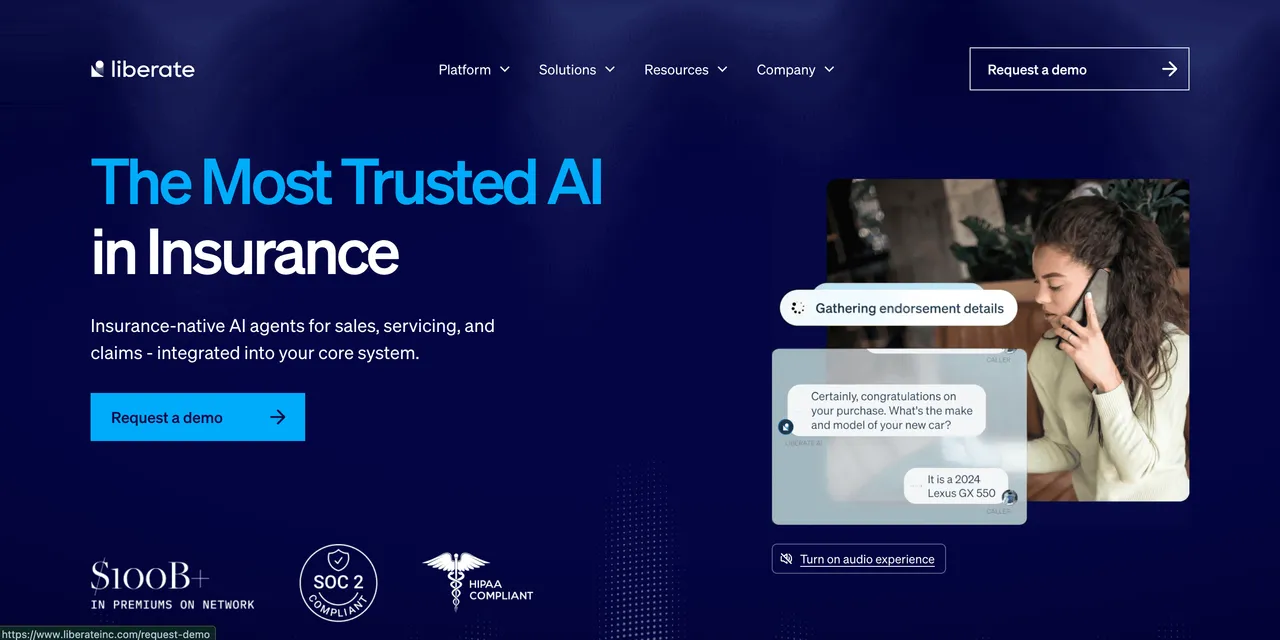
Liberate is built specifically for the insurance industry, with pre-built workflows for FNOL, policy changes, and claims management. It is the quickest path to a working insurance voice AI deployment if the use case matches their templates.
Best for: Small to mid-sized insurance agencies and carriers that want insurance-specific templates rather than a general-purpose platform.
Strengths:
- Pre-built workflows for FNOL, claims status, policy renewal, and payment reminders
- Insurance domain expertise built into the product, not configured per customer
- Integration with rating engines and policy management systems
- Sentiment analysis tuned for insurance customer calls
Limitations:
- Limited flexibility outside the insurance vertical
- STIR/SHAKEN attestation depends on the carrier they route through, not Liberate directly
- Less suitable for carriers needing deep customization beyond insurance templates
Insurance use cases:
- Claim intake (FNOL) with pre-built incident reporting flows
- Policy renewals and upsell on outbound campaigns
- Compliance and DOI documentation through automated call logging
Compliance posture: SOC 2 documented per vendor materials . HIPAA status not publicly documented. STIR/SHAKEN attestation dependent on carrier.
Pricing: Custom pricing based on call volume.
5. Vapi
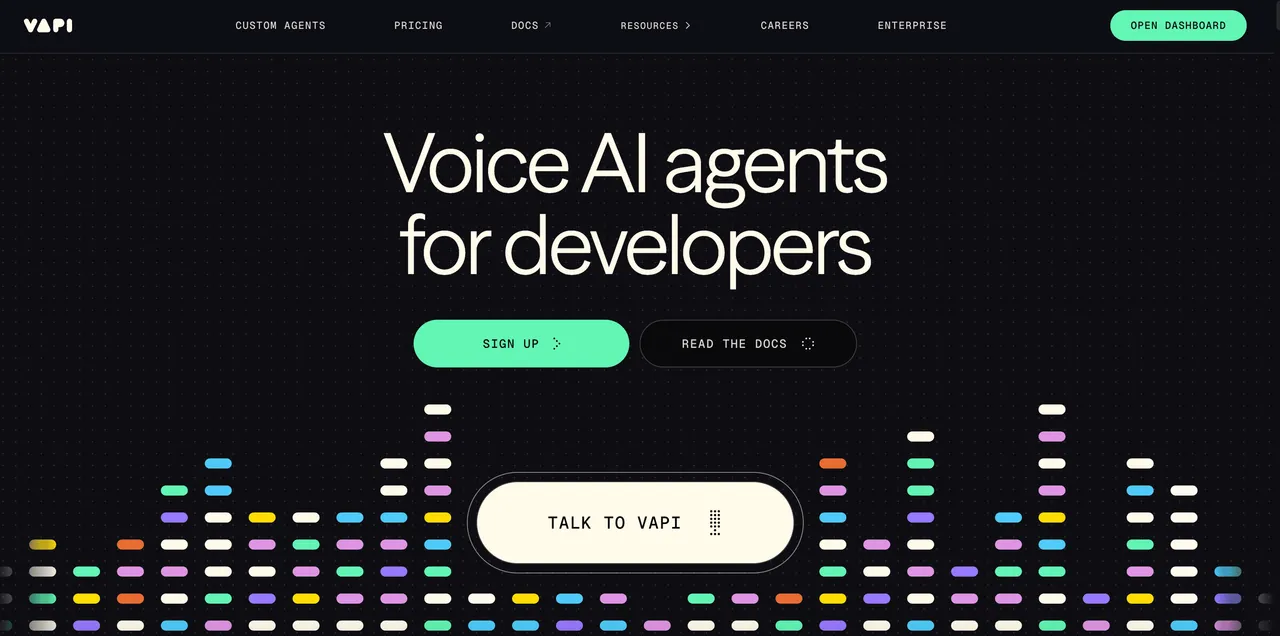
Vapi is a developer-first orchestration platform that gives engineering teams full control over STT, LLM, and TTS selection. Production stack typically spans Twilio plus Deepgram plus OpenAI plus ElevenLabs plus Vapi orchestration. That's five vendor boundaries and four margin layers on every call. It is the quickest way to build a custom voice agent if you accept that the production stack will span multiple vendors.
Best for: Engineering teams prototyping custom voice agents who want to compose STT, LLM, and TTS providers themselves.
Strengths:
- Choose any STT, LLM, and TTS provider (OpenAI, Anthropic, Deepgram, ElevenLabs, others)
- Modular "Blocks" feature for managing conversation flow
- Multi-agent systems for handoff scenarios
- Quick time to first call for developers familiar with voice APIs
Limitations:
- Production stack spans multiple vendors. Latency and accountability depend on what you compose
- STIR/SHAKEN attestation handled by the carrier the customer brings, not Vapi
- HIPAA and SOC 2 posture depend on the underlying provider mix
Insurance use cases:
- Quote intake automation with custom routing logic
- Lead qualification with A/B testing across different LLMs
- Multi-agent handoff between intake and policy servicing agents
Compliance posture: HIPAA and SOC 2 dependent on the customer's chosen provider stack. STIR/SHAKEN attestation dependent on carrier.
Pricing: Pay-as-you-go from $0.05 per minute , plus underlying provider costs.
6. Voiceflow
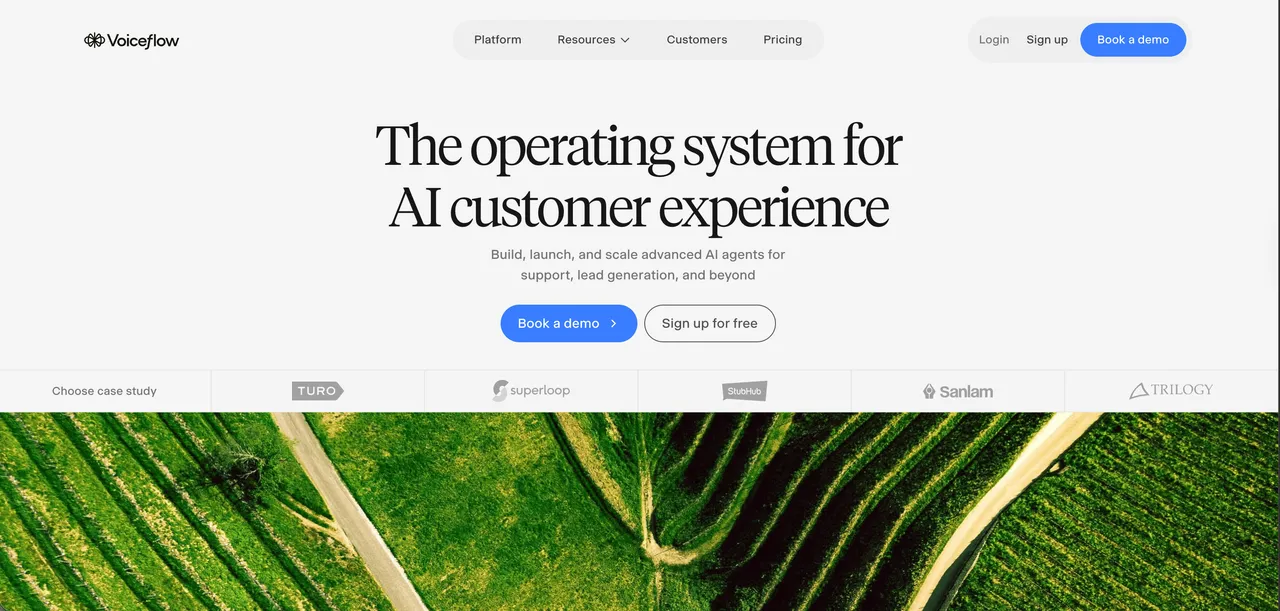
Voiceflow is a visual no-code builder with broad channel support across voice, chat, and messaging. It is widely used for chatbot design, with voice as one channel among several.
Best for: Insurance teams that want a visual flow builder for designing conversational agents across channels, with voice as one output.
Strengths:
- Drag-and-drop visual builder accessible to non-engineers
- Broad channel support across voice, web chat, and messaging
- Pre-built templates including insurance use cases
- Strong design and prototyping experience
Limitations:
- Voice depth is limited compared to voice-first platforms. The product is multi-channel by design
- Production voice deployments typically require integration with a separate carrier or telephony provider
- STIR/SHAKEN attestation handled by the integrated telephony provider
Insurance use cases:
- Customer onboarding flows across web and voice
- Lead qualification with visual flow design
- Policy selection and quote generation prototypes
Compliance posture: SOC 2 documented per vendor materials . HIPAA status not publicly documented. STIR/SHAKEN attestation dependent on integrated telephony provider.
Pricing: Free tier available. Paid plans from $50 per month .
7. Synthflow
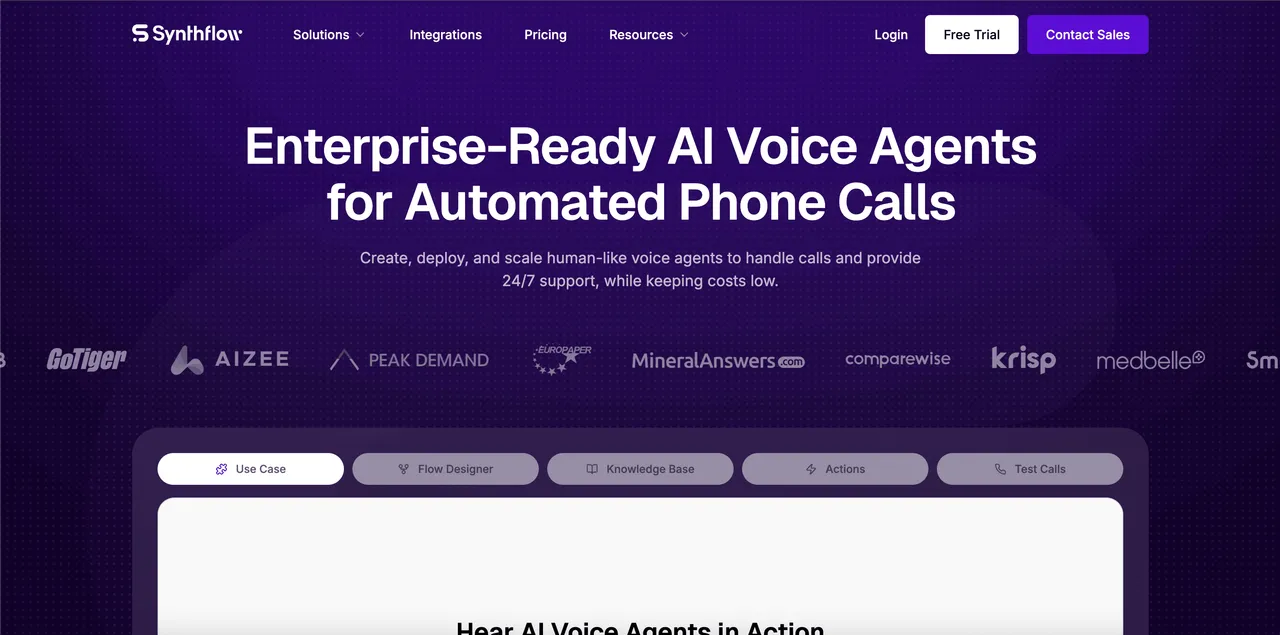
Synthflow is a no-code voice automation platform optimized for rapid deployment. It is the quickest way to get a voice POC live without engineering resources, with the tradeoff that enterprise compliance and customization are limited.
Best for: Agencies and small insurance teams that need a working voice POC in days rather than weeks.
Strengths:
- No-code builder for non-technical teams
- 200+ pre-built app integrations including HubSpot, Salesforce, and Zapier
- Quick time to deployment without developer resources
- Built-in analytics for call performance tracking
Limitations:
- Enterprise compliance posture is limited. HIPAA and SOC 2 documentation are less mature than enterprise platforms
- STIR/SHAKEN attestation handled by the underlying carrier, not Synthflow directly
- Best for standard workflows. Complex insurance scenarios require platforms with deeper customization
Insurance use cases:
- No-code POC for lead qualification
- Appointment booking for agent meetings
- Quote intake automation on standard workflows
Compliance posture: SOC 2 status not publicly documented at enterprise tier. HIPAA status not publicly documented. STIR/SHAKEN attestation dependent on carrier.
Pricing: Starts at $29 per month for 50 minutes. $450 per month for 2,000 minutes .
Decision matrix by insurance workflow
| If you need... | Recommended platform | Why |
|---|---|---|
| Claim intake at scale with HIPAA and STIR/SHAKEN | Telnyx | A-attestation on eligible traffic, HIPAA-eligible, integrated stack |
| Pre-built insurance workflows with minimal customization | Liberate | Insurance-specific templates out of the box |
| Enterprise CCaaS replacement | Cognigy | Mature contact-center swap-in |
| Voice agent orchestration with your own LLM | Retell or Vapi | Quick prototyping, BYO model |
| No-code POC | Voiceflow or Synthflow | Visual builder, quick iteration |
For carriers running insurance contact centers at scale, the Telnyx contact center AI product combines these capabilities into a single deployment.
Frequently asked questions about voice AI for insurance
What's the most reliable voice AI agent for insurance?
Reliability in insurance voice AI is a function of three things: call deliverability, vendor accountability, and latency consistency at scale. Telnyx ranks first on reliability because it operates as a Tier 1 carrier with FCC-registered Service Provider credentials, so it can sign eligible traffic at STIR/SHAKEN A-attestation directly. It also integrates STT, TTS, LLM hosting, and the underlying voice network on one platform, which means one SLA covers the entire production path. Cognigy and Retell AI both have strong reliability records in their respective categories.
Which voice AI platforms are HIPAA-eligible for insurance?
Telnyx is HIPAA-eligible and signs BAAs covering voice infrastructure, which matters for health insurance, Medicare, and any insurance call where Protected Health Information surfaces. Retell AI publishes HIPAA-compliance options per vendor materials. Cognigy supports HIPAA in enterprise deployments per vendor materials. For Liberate, Voiceflow, Synthflow, and Vapi, HIPAA status is not publicly documented or depends on the underlying provider stack the customer composes. For payer call automation and Medicare workflows, ask each vendor for BAA documentation in writing.
Can voice AI agents handle insurance claim intake at scale?
Yes. FNOL intake is one of the highest-volume insurance call workflows, and voice AI handles it well because the data capture follows a structured script. The constraints at scale are different from the constraints at low volume. At 10,000 daily calls during a CAT event, P95 latency matters more than median latency, and verified caller ID at A-attestation matters more than the LLM brand. Telnyx is engineered for this profile, with co-located GPU inference and carrier-owned attestation. Liberate offers pre-built FNOL templates suited to lower-complexity intake.
How do voice AI platforms compare on STIR/SHAKEN attestation?
Most voice AI platforms cannot sign calls at A-attestation directly. They route through a CPaaS or third-party carrier, which controls the attestation and typically achieves B-attestation on enterprise traffic. Telnyx is the exception in this list. It is a Tier 1 carrier with FCC-registered Service Provider credentials, so it can sign eligible traffic at A on numbers customers own. For insurance workflows where call deliverability affects DOI contact-attempt documentation or claim resolution rates, A-attestation is structurally different from B.
What's the best voice AI for insurance policy renewals?
Renewals are an outbound workflow, and outbound voice AI lives or dies on pickup rates. Pickup rates depend on caller ID labeling. Calls signed at STIR/SHAKEN A-attestation land as verified caller ID. Calls at B or unsigned are more likely to land as "Spam Likely" or get blocked. Telnyx signs eligible traffic at A-attestation directly. Liberate offers insurance-specific renewal templates but inherits attestation from its carrier. For renewals at scale, the platform that signs at A directly will outperform on pickup rate, all other factors equal.
Which voice AI platforms work for mid-sized insurance companies?
Mid-sized insurance carriers typically need production-grade compliance and reliability without the implementation overhead of full CCaaS replacement. Telnyx fits this profile with carrier-owned infrastructure and predictable per-minute pricing starting at $0.05 per minute for orchestration, with STT and Telnyx-native TTS included. Liberate works for mid-sized agencies wanting insurance-specific templates. Retell AI and Vapi work for mid-sized teams with engineering resources. Cognigy is generally over-scoped for mid-market unless the company already runs a large contact center.
Can voice AI agents integrate with policy admin systems and CRMs?
Yes, every platform in this list supports policy admin system (PAS) and CRM integration, though the integration path differs. Telnyx, Retell AI, and Vapi expose APIs and webhooks that connect to Salesforce, HubSpot, Guidewire, Duck Creek, and other PAS through standard integration patterns. Voiceflow and Synthflow ship pre-built connectors for major CRMs. Cognigy includes native integration with major contact center stacks. For Guidewire and Duck Creek specifically, ask each vendor for reference customers running those PAS in production.
What latency should I expect from a production voice AI platform?
Natural human conversation runs at 200 to 300ms turn-taking. Production voice AI should target sub-300ms end-to-end and treat 800ms as the failure point, not the goal. Above 500ms, callers start to perceive awkwardness. Above 800ms, they hang up. The 800ms target includes STT, LLM inference, TTS, and network round-trip combined. Telnyx co-locates GPU inference with voice infrastructure in 7 global PoPs to keep the round trip inside one network. Orchestration-only platforms that wrap third-party APIs typically add 200 to 400ms per inter-vendor hop, which can push total latency past the threshold even with quick individual components.
Can voice AI agents handle Medicare and health-insurance call automation?
Yes, but only platforms with HIPAA-eligible infrastructure and BAA coverage. Medicare Advantage, supplement, and payer call automation involve Protected Health Information on most calls, so the BAA is the gating compliance requirement. Telnyx is HIPAA-eligible and signs BAAs covering its voice infrastructure. Retell AI publishes HIPAA-compliance options, and Cognigy supports HIPAA in enterprise deployments. For other vendors in this list, HIPAA status is not publicly documented or depends on the underlying provider stack. Ask for BAA documentation in writing before any Medicare or health-insurance deployment.
Where to start
Insurance call volume is rising, talent gaps are widening, and policyholder expectations for instant service keep rising. The platforms in this guide each fit a different stage of voice AI adoption. The buying decision usually comes down to three questions:
- Can the platform sign calls at STIR/SHAKEN A-attestation on numbers you own?
- Is one vendor accountable end-to-end when a claim call goes wrong?
- Does end-to-end latency stay below 800ms at production volume?
And one underlying question that exposes them all: when a CAT event hits at 2am and FNOL calls start failing, who actually fixes them? In a stack assembled from a telephony vendor plus LLM plus TTS plus orchestrator, the telephony vendor blames the LLM provider, the LLM provider blames the TTS, the orchestration layer blames telephony, and the claims operations team becomes the debugger at the worst possible moment.
Telnyx is built to answer all four. Carrier-owned infrastructure, integrated stack, co-located GPU inference, and HIPAA-eligible BAA coverage on one platform. Global communications, agent platform, and edge compute as one system, not three vendors stitched together. Voice is the wedge: the same infrastructure handles SMS renewal reminders, email policy docs, and agent-to-agent claim coordination as your stack grows.
Contact Us to scope a production deployment.
Share on Social