Most edge computing platforms were built for web performance. But voice calls, SMS workflows, and AI agents need something different: compute that lives where your events live. Here's how communications-native edge compute changes what's possible.

Most edge computing platforms were built for web performance. Faster page loads. Lower CDN latency. Quicker API responses.
That's useful. But it's not what real-time communications need.
Voice calls, SMS workflows, AI agents, webhooks: these aren't web requests. They're live events. And when your compute layer is disconnected from the infrastructure generating those events, you don't just lose milliseconds. You lose architectural control.
That's the problem Telnyx built Edge Compute to solve.
Modern applications are no longer centralized, batch-oriented, or tolerant of delay.
They're event-driven. They respond in real time to calls, messages, and AI interactions happening across the globe. They're increasingly powered by AI agents that require immediate processing, not eventual consistency.
Three forces are accelerating this shift simultaneously:
AI is making latency a functional requirement, not just a performance metric - A voice AI agent that takes 800ms to respond doesn't feel slow; it feels broken. Real-time transcription, speech synthesis, and live AI orchestration all require execution that happens in the same moment as the event, not after it.
Event-driven architectures are now the default - Webhooks, streaming events, API-first triggers, microservices, and modern applications are built around events, not requests. Execution needs to be co-located with the systems generating those events, not waiting in a centralized region for them to arrive.
Companies are consolidating vendors - The era of assembling four separate platforms (telecom provider, cloud provider, serverless runtime, AI platform) and hoping they integrate cleanly is ending. Every additional layer adds latency, complexity, and failure points. Engineering teams want fewer moving parts, not more.
These three shifts are converging on the same conclusion: computation needs to move closer to where events happen. Not just globally distributed, but aligned with the infrastructure that generates those events.
The edge computing market has grown rapidly, but it's grown in the wrong direction for communications workloads.
Today's edge platforms fall into two categories, and both have the same blind spot.
Centralized serverless platforms run in fixed cloud regions. When a call arrives at a telecom PoP and needs to trigger application logic, that logic runs in us-east-1 or europe-west1, wherever your function happens to be deployed. The event travels from its origin to a distant region, logic executes, and the response travels back. Every hop adds latency you can't engineer away, only accept.
CDN-based edge runtimes move execution closer to users, but they were built for web and HTTP traffic, and that constraint is architectural, not cosmetic. They trigger on HTTP requests, not on telecom events. They have no awareness of what's happening at a carrier PoP, no native voice or messaging APIs, and no way to respond directly to a call or SMS without routing through a separate telecom provider, back through an external webhook, and into your function. For web applications, they're the right tool. For real-time communications, you're still stitching together three vendors just to achieve execution.
The gap isn't about performance. It's about architecture. Neither category was built for communications. Neither integrates natively with voice, messaging, or AI APIs. Neither runs its execution layer in alignment with telecom infrastructure.
The result for developers building real-time applications: fragmentation.
A typical architecture today stitches together four separate vendors: a telecom provider to handle calls and messages, a cloud provider to run compute, a serverless runtime to execute logic, and an AI platform to power automation. Each handoff between these layers adds latency. Each vendor adds operational overhead. Each integration point is a potential failure. And through all of it, execution remains fundamentally disconnected from where the real-time events actually occur.
Communications-native edge compute sits at the intersection of three infrastructure shifts: serverless compute, edge infrastructure, and real-time communications. It is not CDN-based execution. It's not web-first serverless. It's not a generic edge runtime distributed for the sake of distribution. It is serverless execution designed specifically for real-time event processing, running close to users globally, with native integration into voice, messaging, and AI workflows built in.
In this model, computation isn't a separate layer you bolt onto a communications stack. It becomes part of the same infrastructure: execution that lives where your events live.
Telnyx Edge Compute runs application logic on edge clusters distributed across Telnyx's global network, deployed close to users worldwide, with optimized low-latency access to Telnyx Voice, Messaging, and AI APIs.
That proximity is the key distinction. Rather than routing every event to a centralized cloud region before any logic runs, execution happens on the node closest to where the request originates, shrinking the gap between "an event occurred" and "your code ran" from cross-regional roundtrips to edge-local hops.
.png?2026-03-27T13%3A55%3A49.163Z)
When a call arrives, rather than traveling to a centralized cloud region, adding significant latency before any logic runs, Telnyx routes an HTTP trigger to your function on the nearest edge node. Your function executes, calls Telnyx Voice, Messaging, or AI APIs directly, and returns a response, all within the same regional infrastructure.
This matters differently for each event type:
For voice, IVR decisions, call routing logic, and AI agent responses execute close to where the call originates, eliminating the noticeable delay that makes voice automation feel robotic.
For SMS and messaging, inbound message processing, enrichment, and reply logic runs on the nearest edge node, not in a cloud function that learned about it via webhook after the fact.
For AI agent workflows, the latency budget for context retrieval, tool-calling, and response synthesis is no longer dominated by infrastructure hops, so the conversation feels live, not queued.
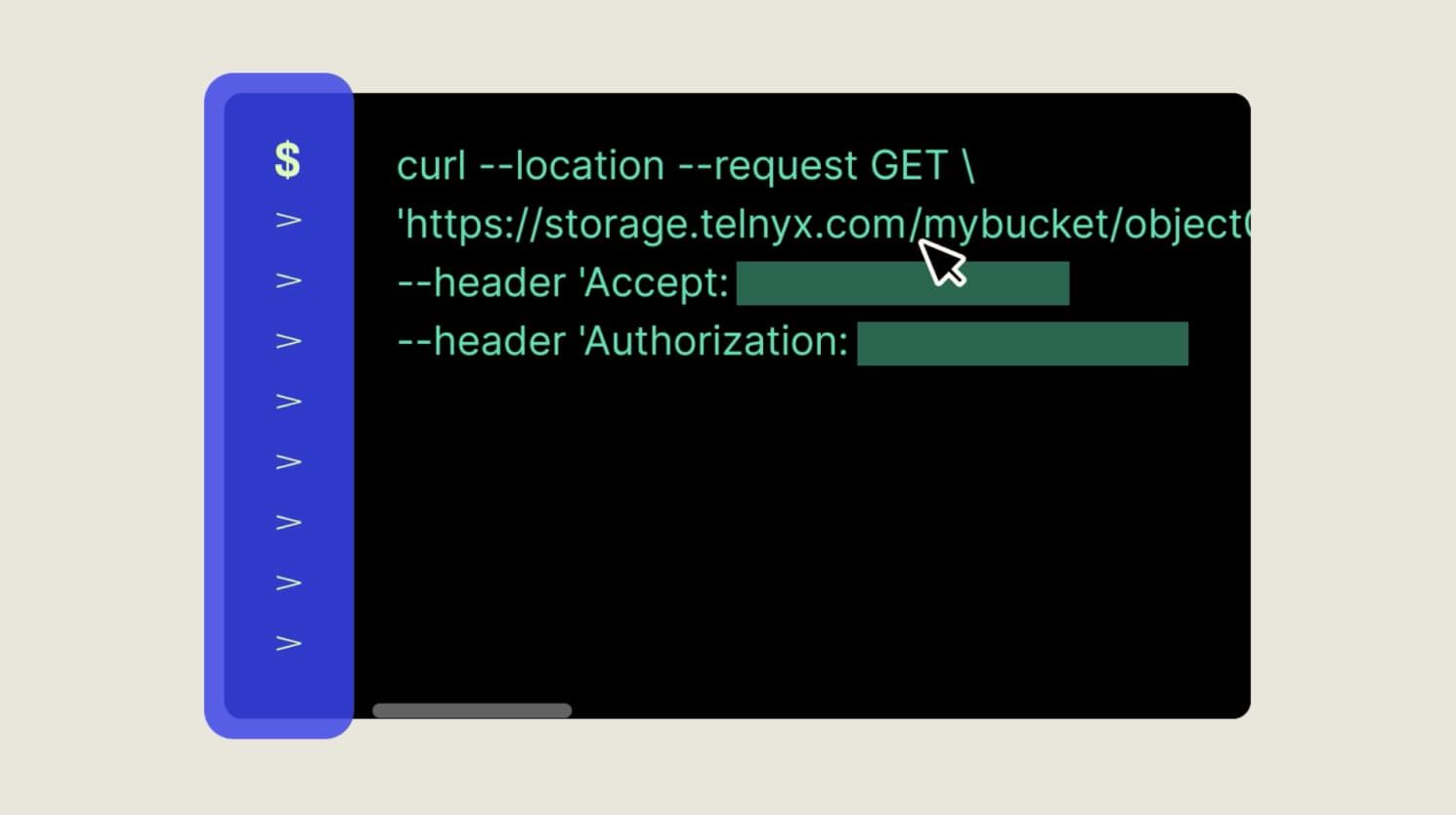
Under the hood, Telnyx Edge Compute runs on RKE2 and KNative, a Kubernetes-native serverless platform. Functions are container-based, not locked into proprietary isolates, which means your code is portable and your runtimes (Python, Go, Java via Quarkus) are standard. Infrastructure scales automatically; you deploy via CLI or REST API, and the platform handles the rest.
The architecture is intentionally API-driven, giving you the latency benefits of proximity without the operational constraints of in-network execution.
When compute runs close to where communications events originate, new applications become possible:
Real-time voice automation. Run IVR logic, call routing decisions, and AI responses at the edge, before events ever touch a centralized system.
Instant messaging workflows. Process inbound SMS, run enrichment logic, trigger downstream workflows, and send replies with dramatically reduced round-trip time compared to cloud functions.
AI agent orchestration. Run routing decisions, context lookups, and AI inference coordination close to where events originate, reducing the latency that makes live AI conversations feel unnatural.
High-frequency webhook processing. Handle real-time event streams from voice, messaging, and IoT systems at the edge, reducing architectural complexity and improving processing speed.
These aren't incremental improvements to existing architectures. They're new architectures that only work when compute runs close to the event.
For developers, communications-native edge compute simplifies the stack significantly.
Instead of assembling and maintaining four separate vendors, you deploy functions via CLI or REST API, trigger logic from calls, messages, or webhooks, and interact with Voice, Messaging, and AI APIs: all within the same platform.
For teams building real-time communications applications, the result is a leaner stack, fewer failure points, and less time managing integrations, and more time building.
The convergence of AI, event-driven architecture, and vendor consolidation pressure isn't a future trend. It's happening in production systems today.
Every team building voice AI agents is dealing with the latency of centralized execution. Every developer processing real-time webhooks is managing the fragmentation of disconnected platforms. Every CTO consolidating their stack is asking whether their current vendor mix is the right long-term architecture.
Communications-native edge compute is the answer to all three of those pressures at once.
It doesn't just reduce latency. It moves execution closer to users and closer to the events that power real-time communications.
That's the shift from edge compute to communications-native compute. And it changes what's possible.
Ready to run your application logic closer to where your events actually happen?
Talk to our team to learn how Telnyx Edge Compute can reduce latency and simplify your communications stack.
Related articles