
Resources
Read it, clone it, or ask the machine.
Infrastructure for real-time agents, documented as it ships. Release notes as features land, guides from the engineers who built the network, builds you can clone, and machine-readable versions of everything.
- Open source builds
- 517
- Releases in 30 days
- 12
- Countries covered
- 140+
- Companies building
- 14,000+
Start here
Four doors, by what you’re doing.
Release notes
What shipped. Dated, by product, as it happens.
Weekly or faster. Pick a product to see everything in that line.
Filter by product
Showing the 8 most recent of 12 notes.
View all releasesGuides and articles
Written by the people who run the network.
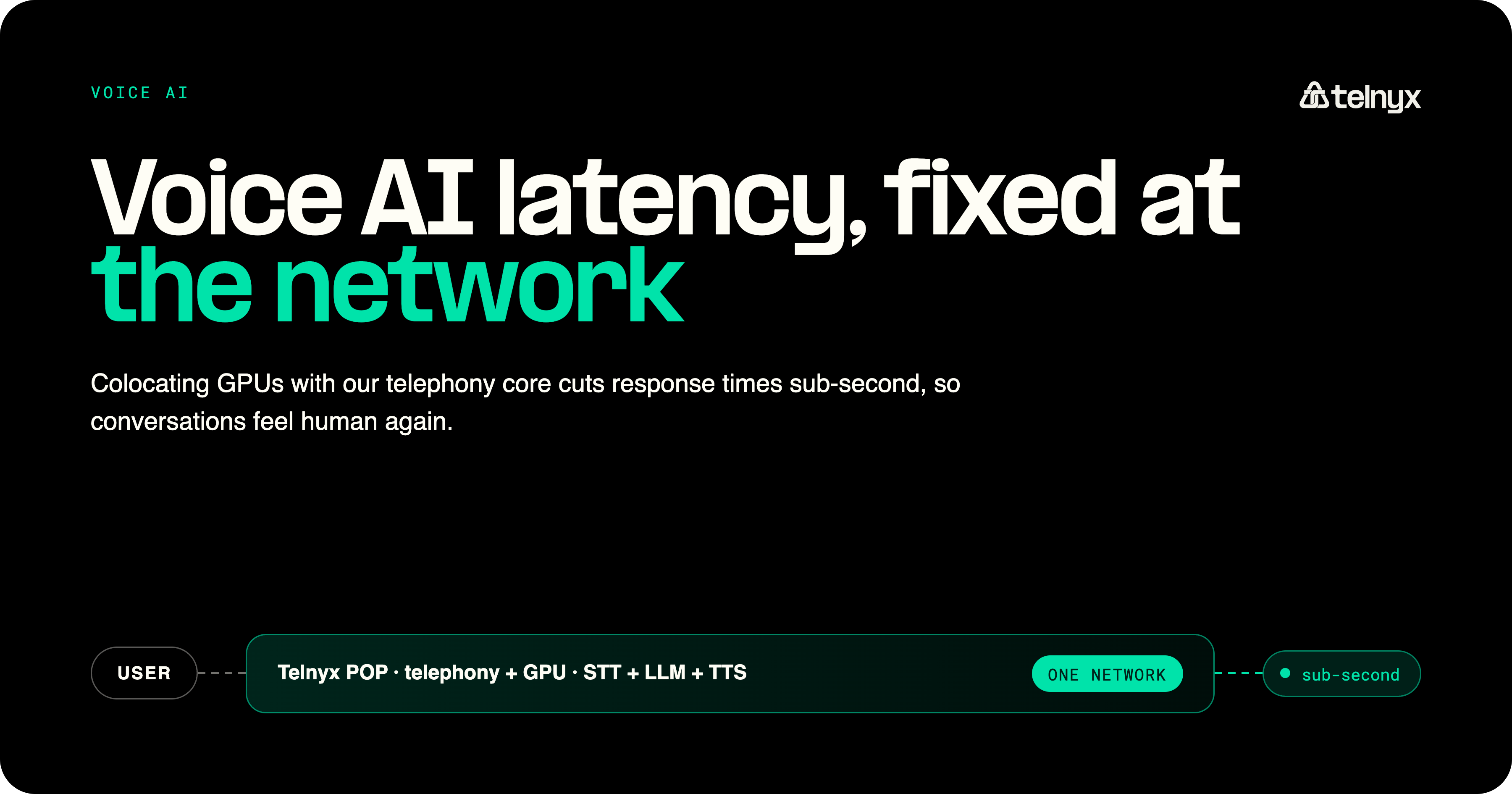
Not sure where to start? Browse the library by product - deep dives, setup guides and working demos, every one dated, bylined and never behind a form.
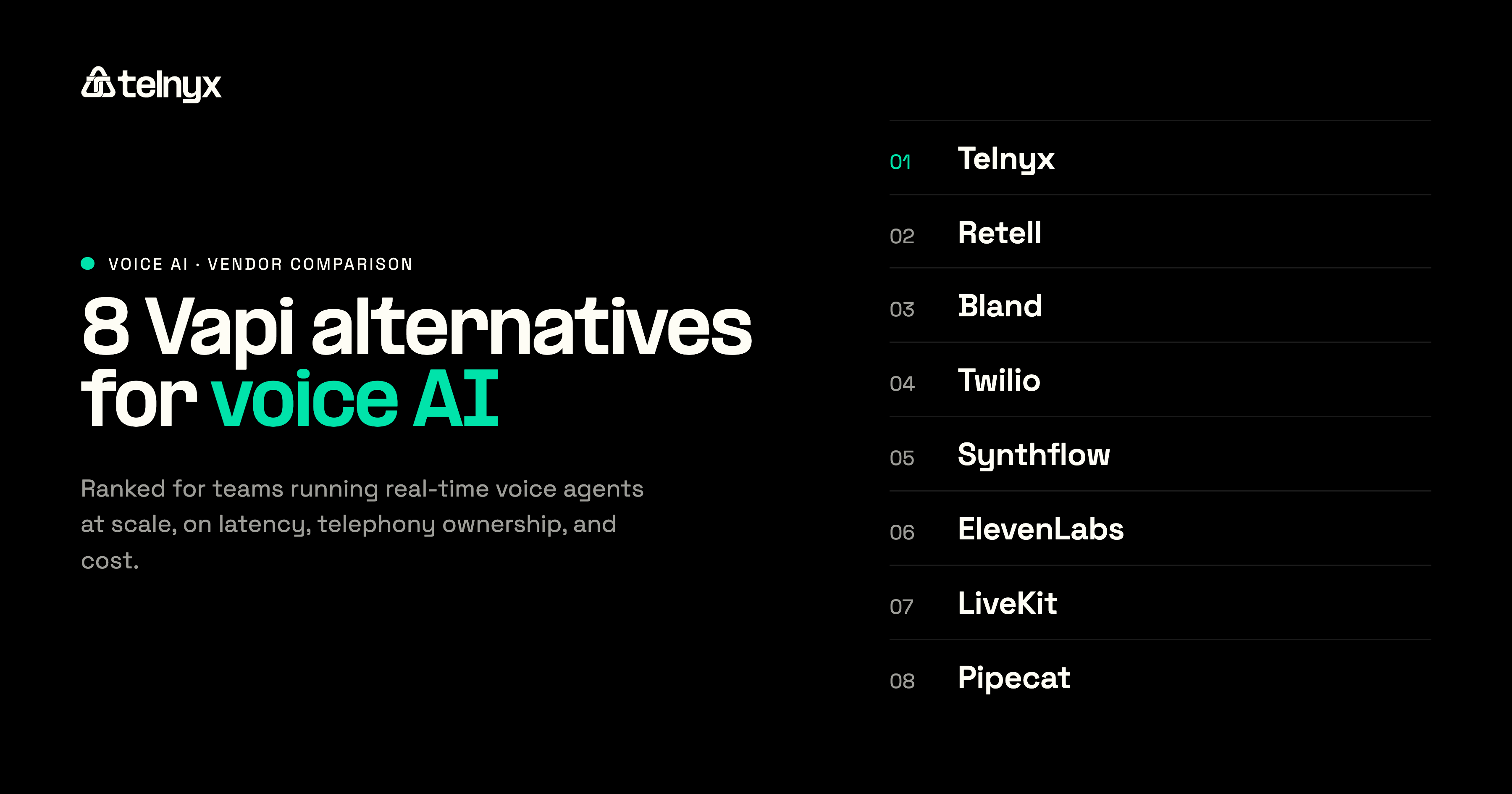



.png)
Page 1 of 9.
Compare
Three layers. Three sets of competitors.
Every page is built from the competitor’s public rate card, with the date it was pulled. Where they are excellent, we say so.
Edge Compute
4 pagesCloudflare put compute at the edge of the internet. We put it at the edge of the phone network. Their network reaches the internet; ours reaches the internet and the phone network.
Agent Platform
4 pagesPrototypes assemble. Production owns. When the demo becomes a business, the rented stack is where it breaks.
Global Communications
4 pagesTelnyx is the carrier. We hold the licenses, own the numbers, and control the interconnects, other CPaaS providers rent numbers and buy PSTN access from someone who does.
Every comparison cites the competitor’s public card and the date pulled. Rates on telnyx.com/pricing.
For the agents reading this
Everything above, as data.
Read the docs, the API surface, and the signup flow without a human in the loop.

Read less. Clone more.
Working code and a curl beat a whitepaper. When you want a human, they run the network and pick up 24/7.


