Flow

Why building a chatbot is harder than it looks

Learn from the Telnyx team’s process of building an AI chatbot so you can build smarter chatbots more quickly with Telnyx Flow.

Dillin-Corbett-Avatar
By Dillin Corbett

This post is part two of an eight-part series about Telnyx's journey to create a high-performing customer support AI chatbot. Stay tuned as we walk you through why and how the Telnyx team built an AI chatbot you'll want to emulate for your support team.

Most businesses see AI chatbots as a shortcut to faster customer service and lower costs. But the reality is far more complex. Building a conversational chatbot that truly understands users, maintains context, and scales effectively is a serious engineering challenge. Developers face obstacles like handling ambiguous queries, managing vast knowledge bases, and ensuring seamless integrations.

Without the right approach, a chatbot quickly becomes more frustrating than helpful. In this post, we’ll break down the biggest hurdles the Telnyx team faced in our own chatbot development and explore how we overcame them. With an awareness of the obstacles we faced in creating a functional bot, your AI assistant can be a solution—not another problem.

The Telnyx AI chatbot project: A developer-first approach

At Telnyx, we set out to build a chatbot that could enhance customer support, reduce agent workload, and deliver instant, context-aware responses.

Rather than relying on a generic chatbot solution, we designed a custom AI chatbot that integrates seamlessly with our infrastructure. The chatbot leverages OpenAI’s language models and a modular architecture to ensure high performance, flexibility, and scalability.

Here were our project goals:

  • Automate responses to common customer inquiries, reducing ticket volume.
  • Deliver accurate, contextual answers by processing historical chat data.
  • Reduce agent workload, allowing human agents to focus on complex issues.
  • Scale efficiently, handling increasing demand without sacrificing performance.

Creating an AI chatbot that delivered the real value we wanted meant tackling a range of technical hurdles. Here’s a closer look at the biggest challenges we encountered and how we solved them.

Key obstacles in chatbot development

Despite the advantages of AI-powered chatbots, building one that met enterprise-grade standards wasn’t easy. Throughout development, we encountered several key challenges:

Ensuring chatbot accuracy and reliability

One of the biggest hurdles was making sure the chatbot provided accurate, relevant answers. AI models like GPT-4 are powerful, but they require fine-tuning and content filtering to ensure they don’t generate misleading responses.

Solution

  • We implemented context awareness by training the chatbot to reference past conversations.
  • We developed a document processing pipeline to structure and retrieve data efficiently.
  • We used AI model monitoring to detect and refine incorrect or off-topic responses.

Handling complex customer queries

Customers don’t always ask simple, one-sentence questions. Many inquiries are multi-step, require follow-up questions, or involve troubleshooting. A conversational chatbot that only responds in isolated exchanges isn’t useful.

Solution

  • We designed a multi-step conversation flow, allowing the chatbot to maintain memory of past interactions.
  • We trained the chatbot to handle conditional responses and trigger workflows when needed.
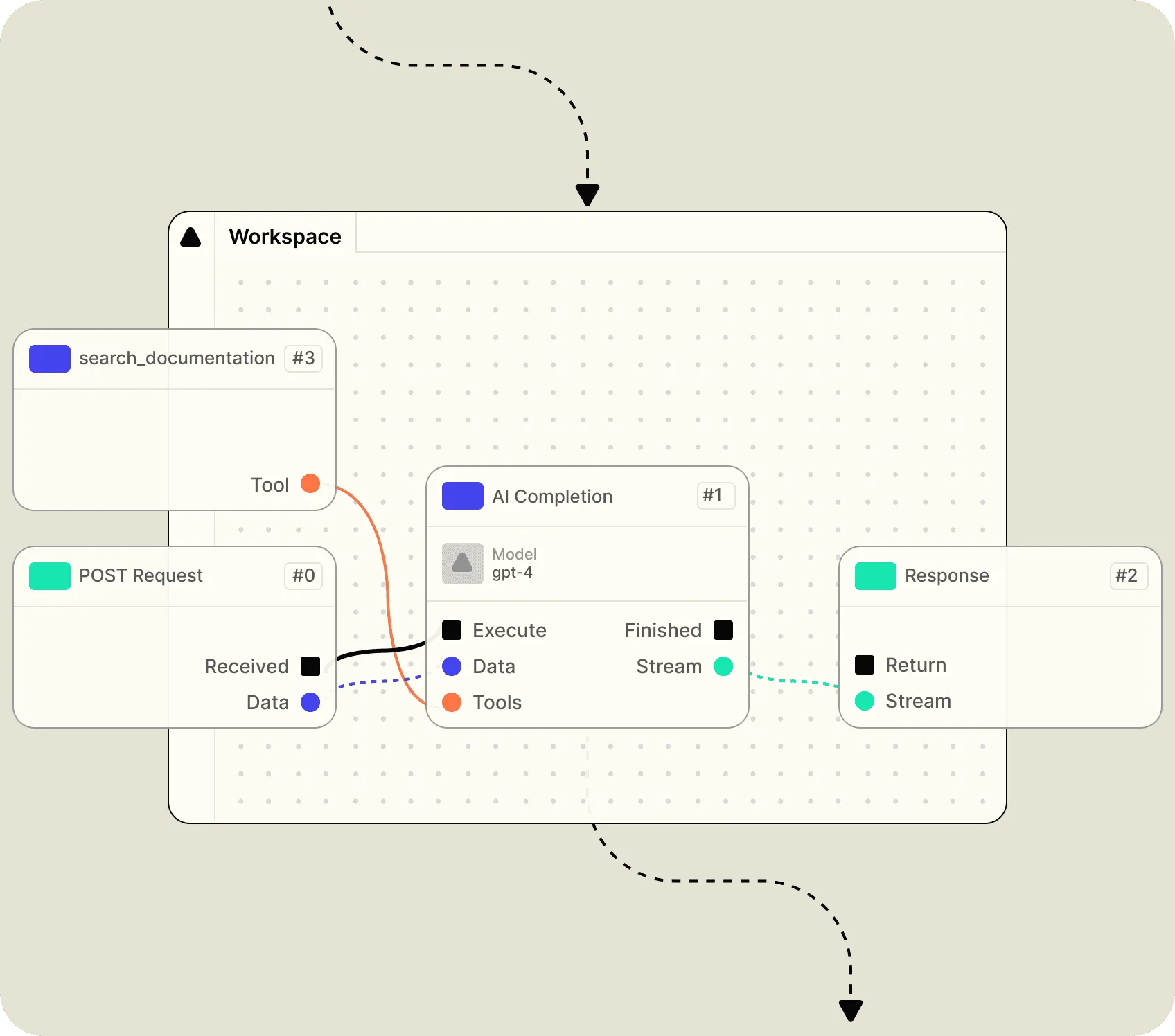
  • We added tool integrations (e.g., search functions, knowledge base lookups) to improve response quality.

Designing a scalable, flexible architecture

For an AI chatbot to work in a high-volume production environment, it must be able to scale efficiently. A poorly architected chatbot will quickly become unreliable and slow as demand increases.

Solution

  • We used a modular architecture that allowed independent components (services, repositories, APIs) to function separately.
  • We built the system on TypeScript and Node.js, ensuring high performance and stability.
  • We implemented horizontal scaling, enabling the chatbot to handle spikes in traffic without performance drops.

Managing knowledge and document processing

To answer questions effectively, the chatbot needed access to structured, relevant knowledge. This issue meant integrating multiple document types (Markdown, PDFs, JSON, and Intercom articles) into a centralized knowledge base.

Solution

  • We developed a document processing pipeline that ingests, organizes, and retrieves relevant content.
  • We gave the chatbot access to real-time data sources, ensuring responses were always up to date.
  • We optimized knowledge retrieval with tokenization and chunking, breaking large documents into digestible pieces for faster response times.

Balancing automation with human intervention

AI chatbots can handle a significant portion of customer inquiries, but not every issue can or should be solved by automation. Some problems require human judgment, empathy, or complex troubleshooting.

Solution

  • We built seamless escalation paths, allowing the chatbot to hand off conversations to live agents when necessary.
  • We integrated the chatbot with Telnyx Flow, enabling businesses to define custom workflows for escalation, routing, and follow-ups.
  • We gave users options to request a human agent when needed, improving customer trust in the system.

Each obstacle pushed us to refine our chatbot’s design and functionality. Through trial and error, we learned valuable lessons that can help others navigate the same development process.

Lessons learned from the development process

Building an AI chatbot from the ground up provided several key takeaways for our engineering team:

AI is a powerful tool, but structure is key. Without a well-organized system for managing knowledge and responses, even the most advanced AI will fail to meet customer needs.

Scalability should be a priority from day one. If a chatbot can’t handle increasing demand, it won’t succeed in the long run. Our modular design ensured we could scale without bottlenecks.

Human oversight is still essential. AI chatbots can automate support, but businesses must implement quality control, escalation processes, and continuous improvements to maintain reliability.

Context-aware responses make all the difference. Customers don’t want chatbots that act like “reset buttons.” The ability to remember previous interactions and provide contextually relevant answers can make a huge difference in providing quality support.

From roadblocks to results: Building a smarter AI chatbot

Building an AI chatbot is far more than just plugging in an LLM (large language model). It requires balancing automation with accuracy, designing a scalable system, and ensuring the bot can handle real-world customer interactions. Without careful planning, chatbots can frustrate users instead of helping them, leading to wasted development time and lost trust. The good news is, by understanding the challenges upfront, businesses can create AI assistants that are truly helpful, efficient, and scalable.

At Telnyx, we built our own AI chatbot to streamline customer support, and we know firsthand what it takes to develop a solution that works. That’s why we created Telnyx Flow, a low-code platform that simplifies chatbot development without sacrificing power. With prebuilt AI integrations, real-time automation, and seamless scalability, Flow helps businesses launch smart, reliable chatbots in minutes—not months. If you're looking for a faster, easier way to build an AI-powered support chatbot, start with Telnyx Flow today.

FAQ

What is a key challenge with chatbots? Understanding user intent under ambiguous or noisy inputs is hard, especially when context shifts mid-conversation. Teams counter this with strong NLU, short clarifying prompts, and continuous tuning from real user transcripts.

How do chatbots handle multiple languages effectively? They need domain-specific training data per locale, consistent entity standards, and models that respect grammar and tokenization differences. A translation fallback can help, but quality depends on maintaining glossaries and context memory.

What makes integrating chatbots with existing systems difficult? Different systems, channel protocols, and messaging types force bots to translate intents into varied payloads and error models. Robust orchestration with idempotency, retries, and tracing is essential to keep transactions reliable.

How do you reduce chatbot hallucinations and errors? Ground generation in approved data using retrieval, tool calling, and deterministic templates for critical steps. Add human-in-the-loop review, red-teaming, and production monitors for drift, bias, and unexpected prompts.

What are the main types of chatbots and their trade-offs? Rule-based and retrieval bots are fast and predictable but limited in scope. Generative and hybrid bots are more flexible but require stronger guardrails, testing, and observability.

How do channel limits like SMS and MMS affect chatbot design? SMS character limits and lack of native media, detailed in the SMS vs. MMS comparison, constrain guided flows and troubleshooting. Using MMS messaging for images or receipts can improve clarity but adds file-size rules, carrier filters, and cost considerations.

How should you measure chatbot success? Beyond containment and CSAT, omnichannel bots should track rich-media engagement such as click-through or view rates, which MMS marketing benchmarks can help contextualize. Monitor fallback rate, average handle time, and first contact resolution to ensure automation is improving outcomes.


Contact our team to build a smarter, more efficient support chatbot that can elevate your customer support with Telnyx Flow.
And stay tuned for our next post, where we explore the architecture of a smarter, more effective AI chatbot.
Share on Social

Related articles

Sign up and start building.