Learn how communications APIs can help your healthcare organization communicate with more patients, more effectively.

Advancements in communications APIs have revolutionized the way hospitals and medical professionals communicate with their patients and each other. Leveraging this new technology has resulted in faster, more convenient access to information and care.
Investment in specialized healthcare communications and telehealth platforms can help hospitals and physicians become efficient while ensuring a high level of patient care. For example, automated appointment reminders and notifications reduce the percentage of missed appointments, helping patients avoid cancellation fees and helping providers elevate the patient experience. Adopting platforms that offer features such as high-quality audio and PSTN connectivity increases access for patients without internet or those living in remote areas.
Communications APIs for messaging, calling, and faxing are gaining steam in telehealth. Since these APIs are flexible and customizable, they allow telehealth providers to optimize and personalize the patient experience. Among other things, telehealth communications APIs allow providers to:
These capabilities allow healthcare providers to communicate more efficiently with more patients, while decreasing operational costs. Below, we’ll discuss just a few of the benefits such APIs can provide.
Access to tools that can help healthcare providers communicate more efficiently and effectively with patients can help organizations improve the patient experience in a number of ways.
In many industries, text reminders about upcoming appointments are critical. In healthcare, missed appointments cost U.S. hospitals $150 billion per year.
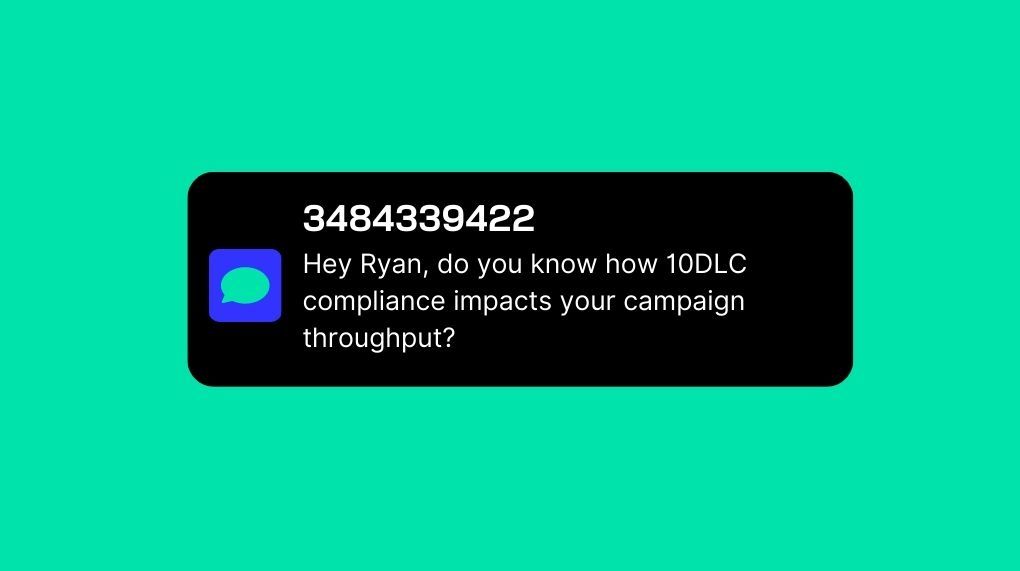
Messaging APIs can help providers automatically send a friendly appointment reminder to significantly reduce the no-show rate and enhance the patient experience.
Integrating voice calling into existing healthcare systems helps patients connect with medical professionals over the phone no matter their location, significantly increasing healthcare accessibility. This capability is particularly beneficial for patients who live in remote areas, have mobility issues, or simply prefer the convenience of a phone call.
Voice API features such as speech-to-text can improve the speed and efficiency of communication between patients and medical professionals. With speech-to-text, patients can leave a voice message that’s automatically transcribed into text, allowing doctors to quickly and easily access the information they need without having to listen to a recording.
Communications APIs can also help hospitals run more efficiently. Certain features, like automated reminders, can automate everyday processes, reducing manual workloads for staff. For example, implementing a Cloud IVR system and answering machine detection can help improve productivity by ensuring calls only connect to live recipients. This capability reduces the chance of missed messages and the risk of miscommunication.
With over a decade in the communications industry, Telnyx can help your healthcare organization communicate effectively and efficiently with your patients. Below are just a few of the features we can provide to help your organization run smoothly.
In healthcare, every call, text, or notification is mission-critical. It’s important to choose a dependable communications provider that can deliver high-quality, real-time communications.
Telnyx has built a private, multi-cloud network for secure, high-quality communications that keeps all transmitted data off the public internet. This network is less susceptible to cyberattacks and acts as a dedicated private highway for your communications.
Our network also allows your traffic to reach its destination quickly, minimizing deliverability issues and latency that negatively impact call-quality. By avoiding the public internet and its vulnerabilities, telehealth providers can facilitate reliable voice and messaging communication between practitioners and patients.
Most patients won’t attend a telehealth appointment on a weekly or even monthly basis, so practitioners’ usage of communications services may vary. Our pay-as-you-go pricing offers a flexible solution, allowing you to pay only for what you use and the features you actually implement.
With a high-quality communications provider, you can easily integrate APIs into your platform, minimizing development costs and turnaround times.
Contact our team of experts to learn how Telnyx can help healthcare providers and platforms streamline their communications stack to help provide a best-in-class experience to practitioners and patients.
What is a telehealth API? A telehealth API is a set of endpoints that let software schedule visits, spin up secure voice or video, share records, and trigger workflows across care journeys. It is a class of communications APIs that focuses on real-time patient-provider interactions and compliant data exchange.
What are APIs in healthcare? Healthcare APIs expose data and actions from EHRs, scheduling, billing, imaging, and communications systems so apps can interoperate. They typically use FHIR or HL7 for clinical data and OAuth 2.0 for delegated access control.
What are the four types of APIs? The four common API styles are REST, SOAP, GraphQL, and gRPC. Each balances ease of use, schema rigidity, and performance differently, so teams pick based on payloads, latency, and tooling.
What are the 4 types of telehealth? The core telehealth models are synchronous care, asynchronous store-and-forward, remote patient monitoring, and mobile health. These cover live consultations, secure sharing of images and reports, connected devices streaming vitals, and app-based coaching or reminders.
Is telehealth going away in 2025? No, telehealth is not going away, though some pandemic-era flexibilities are shifting to permanent or region-specific policies. Organizations should track payer rules, licensure compacts, and cross-border data laws to keep virtual care eligible for reimbursement.
How do telehealth APIs handle patient messaging at scale? Cohort outreach and care team updates at scale often rely on group or broadcast messaging to balance personalization and throughput. Good implementations include rate limiting, opt-in tracking, and audit logs to meet regulatory expectations.
Can telehealth APIs send images or video snippets for clinical context? Yes, image-based instructions and wound photos are typically delivered with MMS messaging, which supports media alongside text. Platforms also set size limits, retention policies, and encryption to protect PHI while keeping communication clear.
Related articles