
Agent platform built on owned infrastructure
Build, deploy, and scale voice AI agents on the only platform that owns the entire stack, from GPUs that host frontier speech and AI models, to phone numbers, and telephony. One API, one bill, complete ownership.









WHY TELNYX
Everything an enterprise voice agent needs, in one place
When your agent answers a call, five things have to work in lockstep: the number, the telephony, the speech-to-text, the inference, and the voice that speaks back. Telnyx delivers all five natively, on infrastructure we own — from the GPUs that host your models to the network that carries your call.
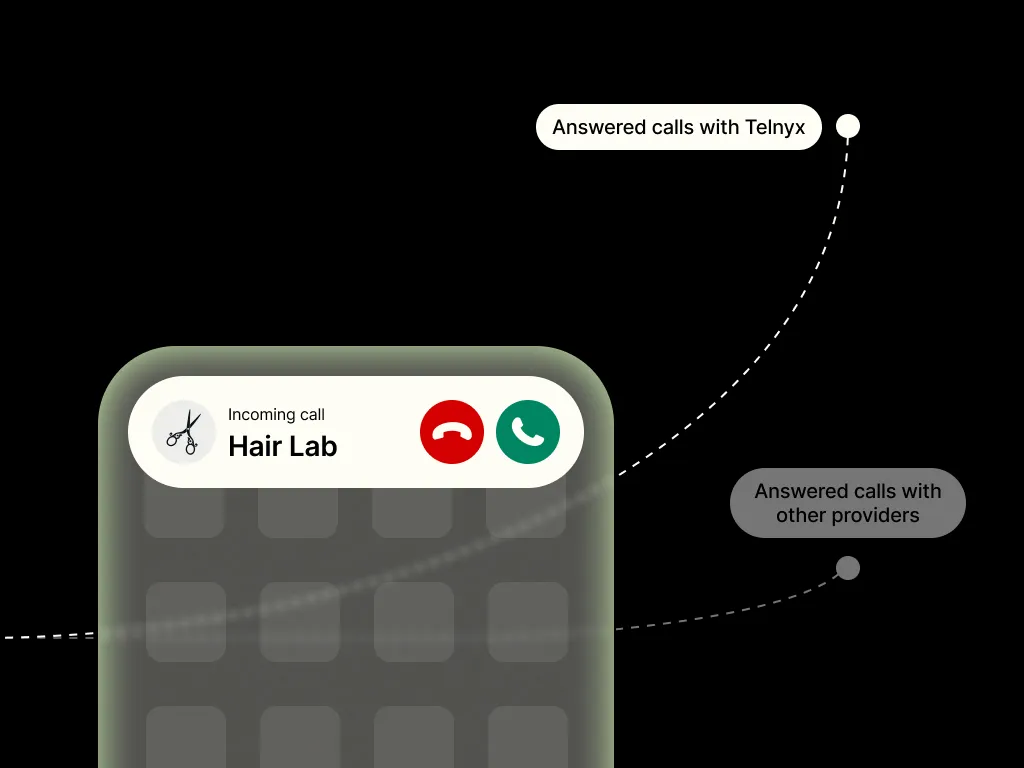
Calls that get answered
Telnyx is a licensed carrier issuing real numbers, with identity and verification handled at the network level.
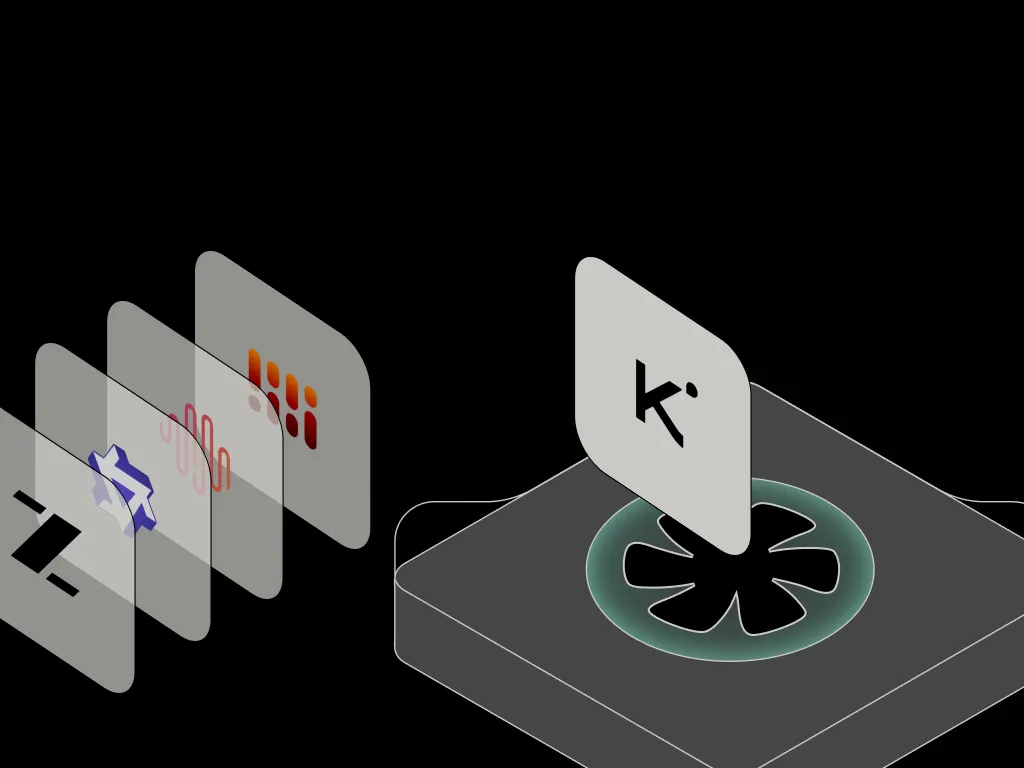
Models on infrastructure we own
Frontier speech and language models run on Telnyx GPUs co-located with the call path, not rented from a third party and bolted on.
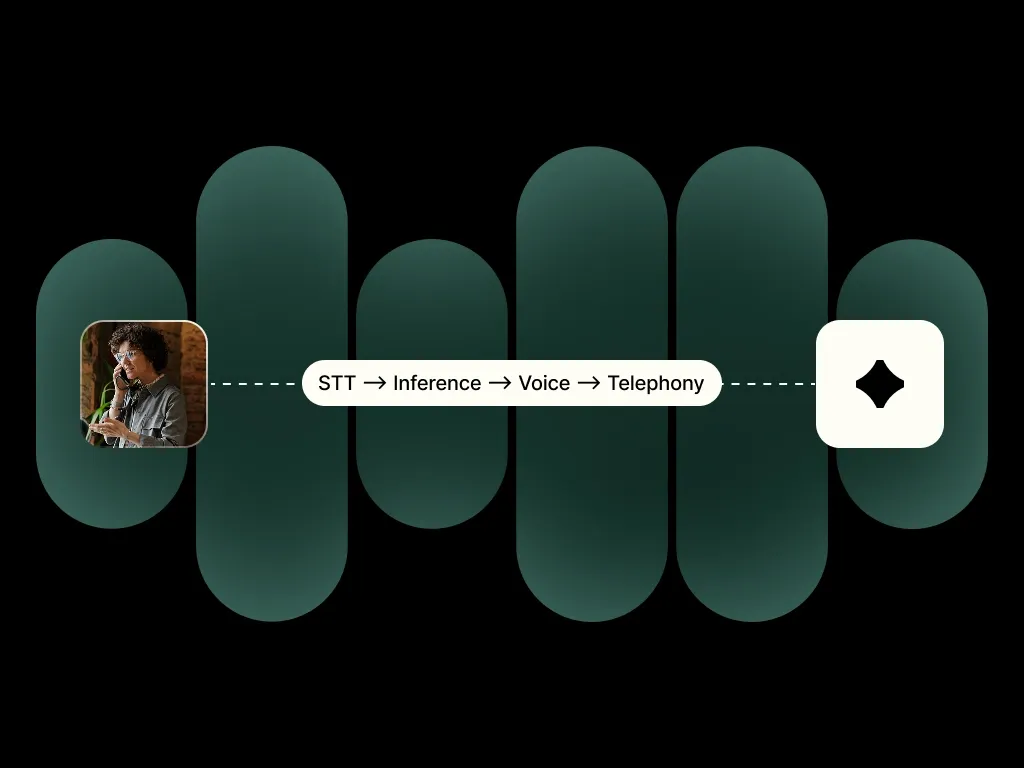
Native orchestration
STT, Inference, Voice, Telephony in one pipeline. No webhooks ping-ponging between vendors mid-sentence.
OUR INFRASTRUCTURE
Five vendors is a Frankenstack. One stack is a platform.
Stitching Twilio, a TTS vendor, an STT vendor, and an LLM host into one agent builds a Frankenstack: every vendor boundary adds a hop a caller can hear, and every dashboard hides part of the story. Telnyx closes the loop in 200ms on one private network — and AI Insights shows you every conversation, end to end.
Telnyx Stack
2 hops | 1 vendor
PSTNTelnyx Edge PoP → Private IP Network → GPU Cluster (STT + TTS + LLM)PSTN
230+
COUNTRIES
$0.05
PRICE PER MIN
200
MILLISECONDS
A—Level
CALLER IDENTITY
AGENT RUNTIME
Configure the environment your agents run in
Choose the models, voice, and infrastructure your agents will operate on. Once live, agents control the system directly, speaking, routing, and acting without human intervention.
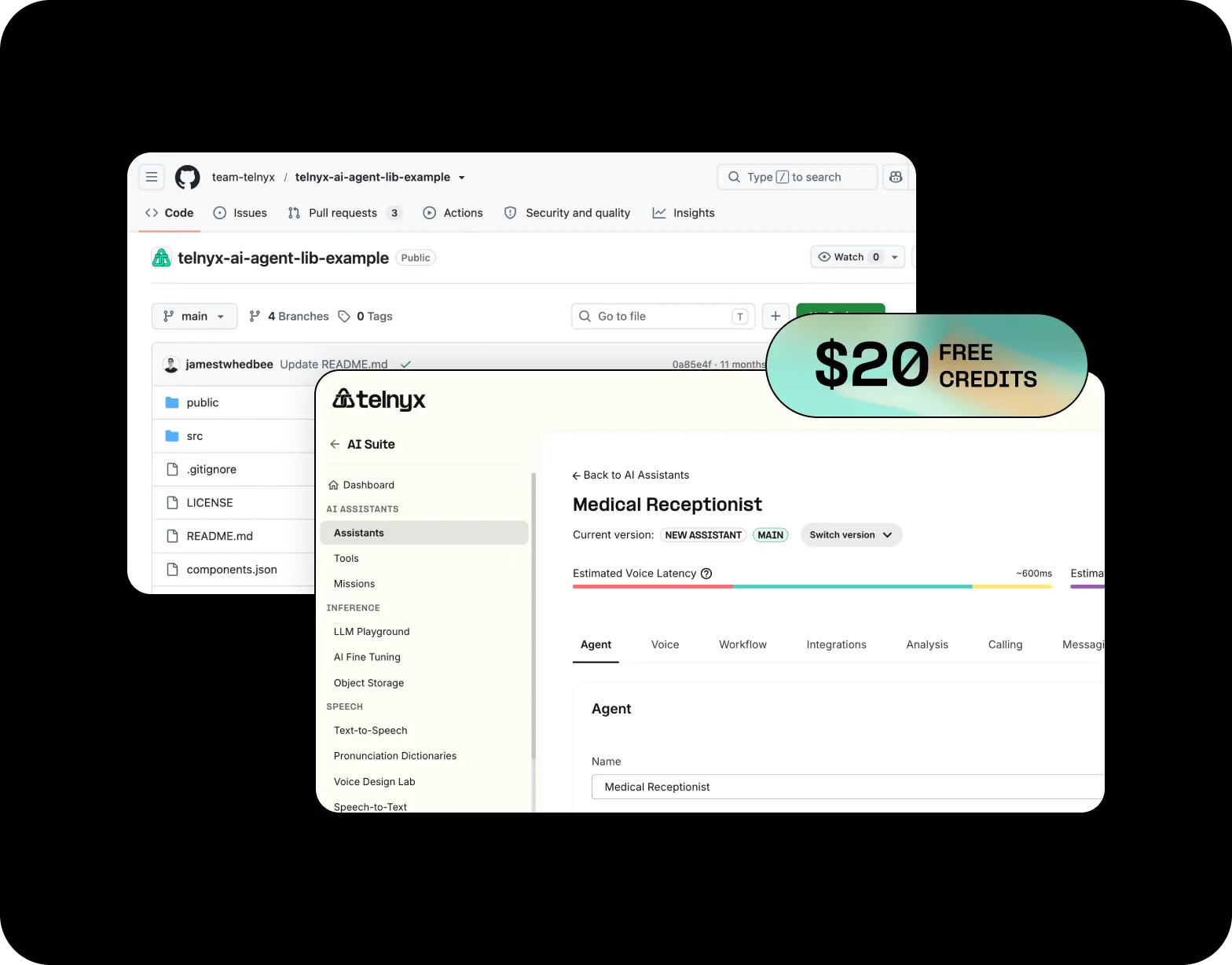
Start from the repo
Clone the example agent library, drop in your API key, and you have a working voice agent, config, tool schemas, and README included.
git clone https://github.com/team-telnyx/telnyx-ai-agent-lib-examplePrefer a UI? The portal's AI Assistant Builder gets you to the same place without code. Either path starts with $20 in free credits.
HOW TO
Build your first agent
Going from idea to a live agent on a real phone number takes four steps — no code required, unless you want it. Define the agent in the portal's no-code builder or scaffold it from the GitHub repo, pick a voice, attach a number, test it with simulated calls, and go live. Your first agent can take its first call today, with $20 in free credits.