
AgentSDK
Durable state, zero-hop platform bindings, your framework unchanged.
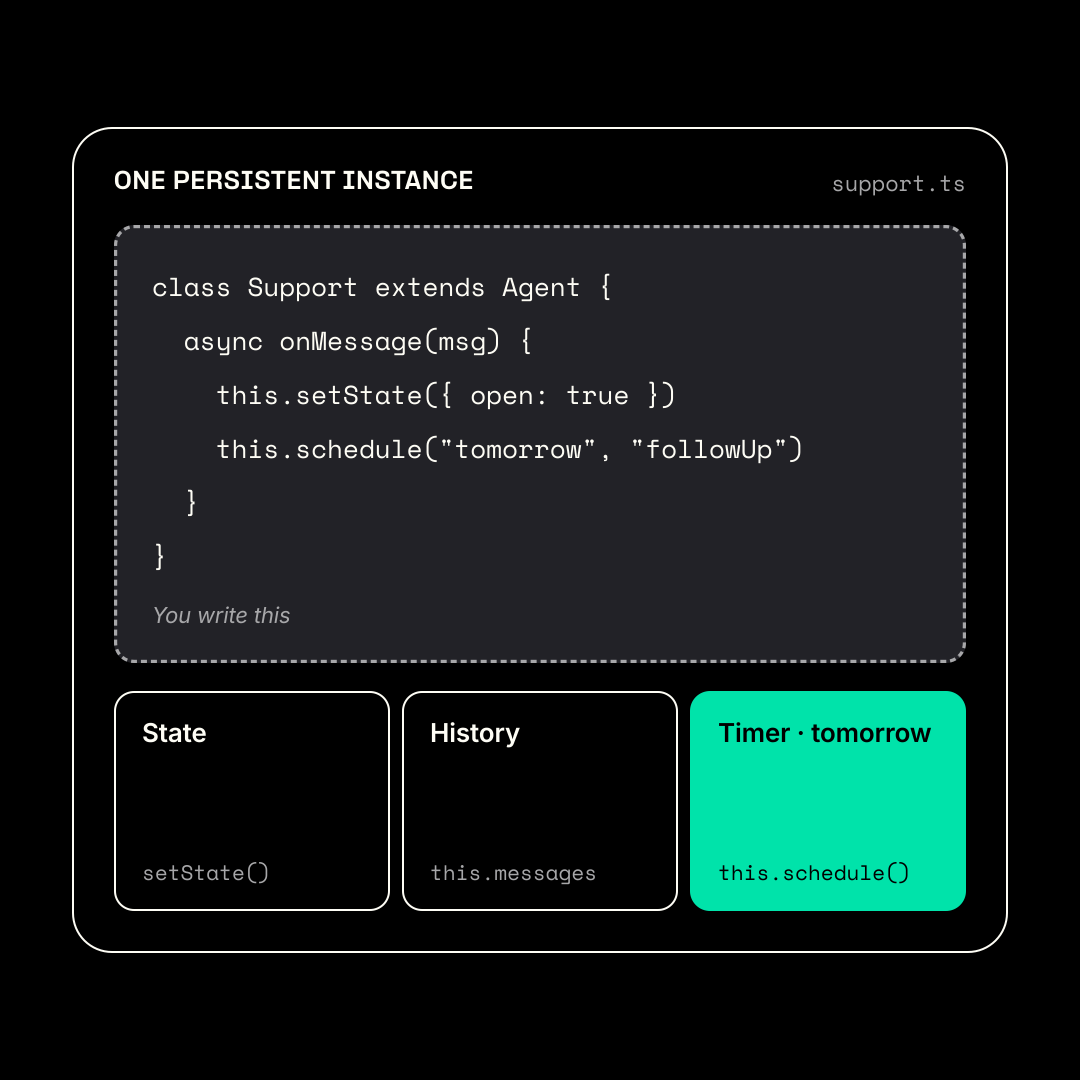







WHY TELNYX
The agent SDK with the network underneath
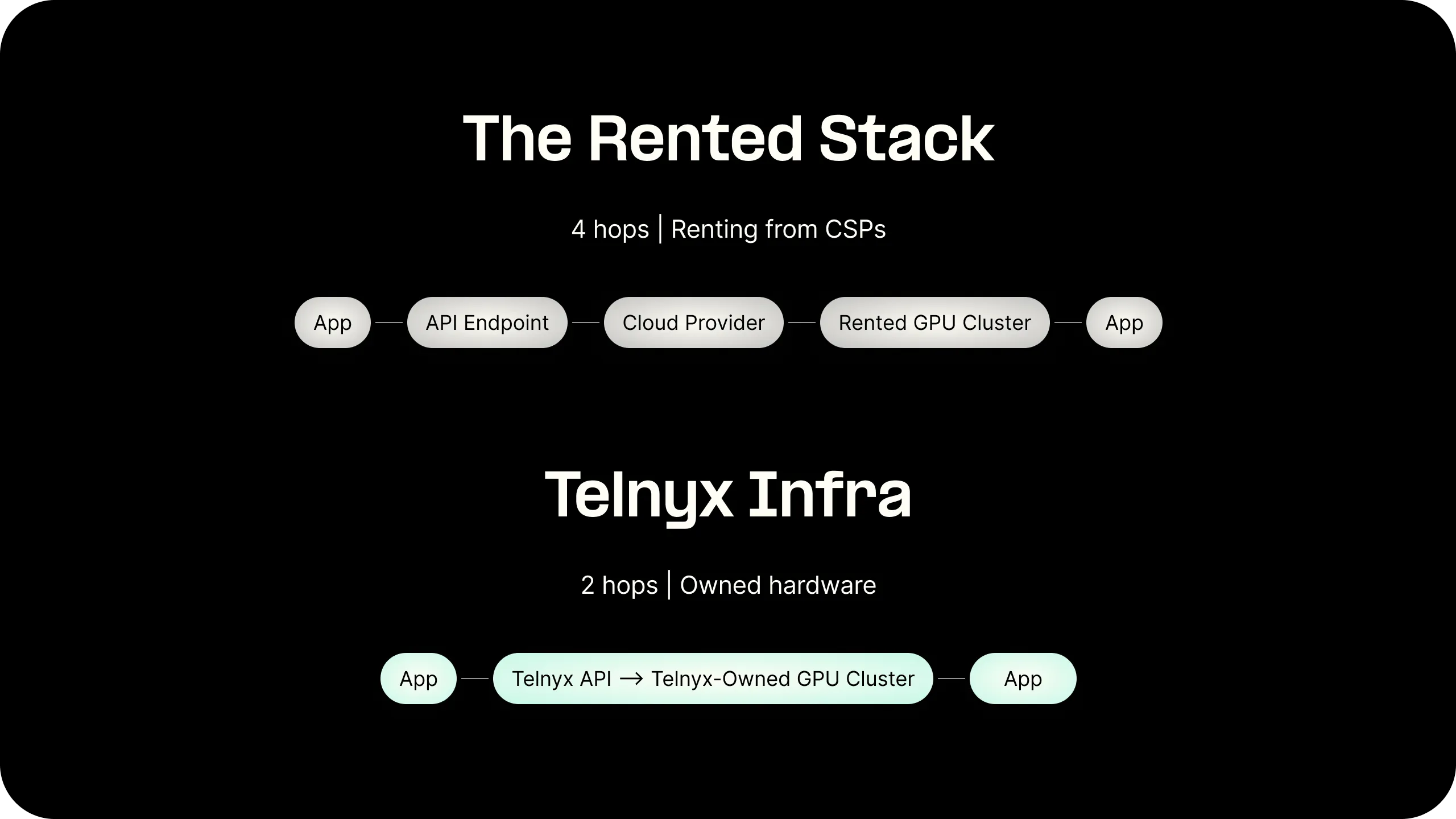
Every other agent stack has a seam. Your agent runs on a compute platform, its memory lives in a database, its LLM calls go to an inference provider, its phone calls go through a telephony API. AgentSDK closes the seam.
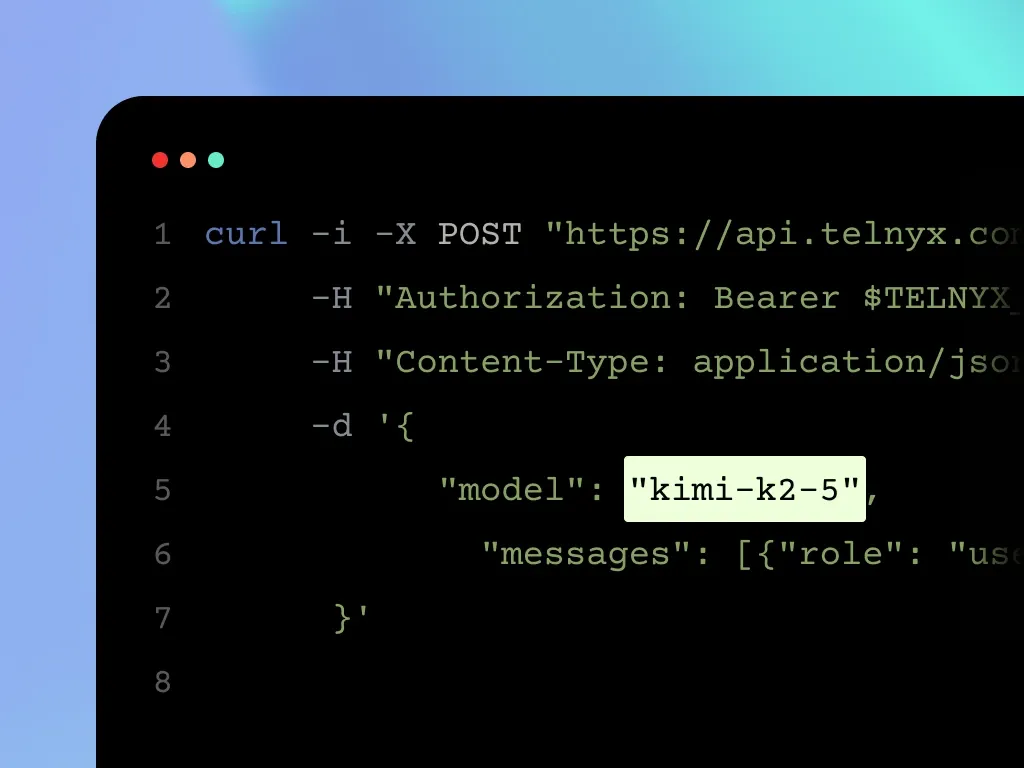
One API key, one bill
Inference, voice, messaging, KV, and storage all through the same API key. No multi-vendor setup, no separate billing, no integration glue between services.
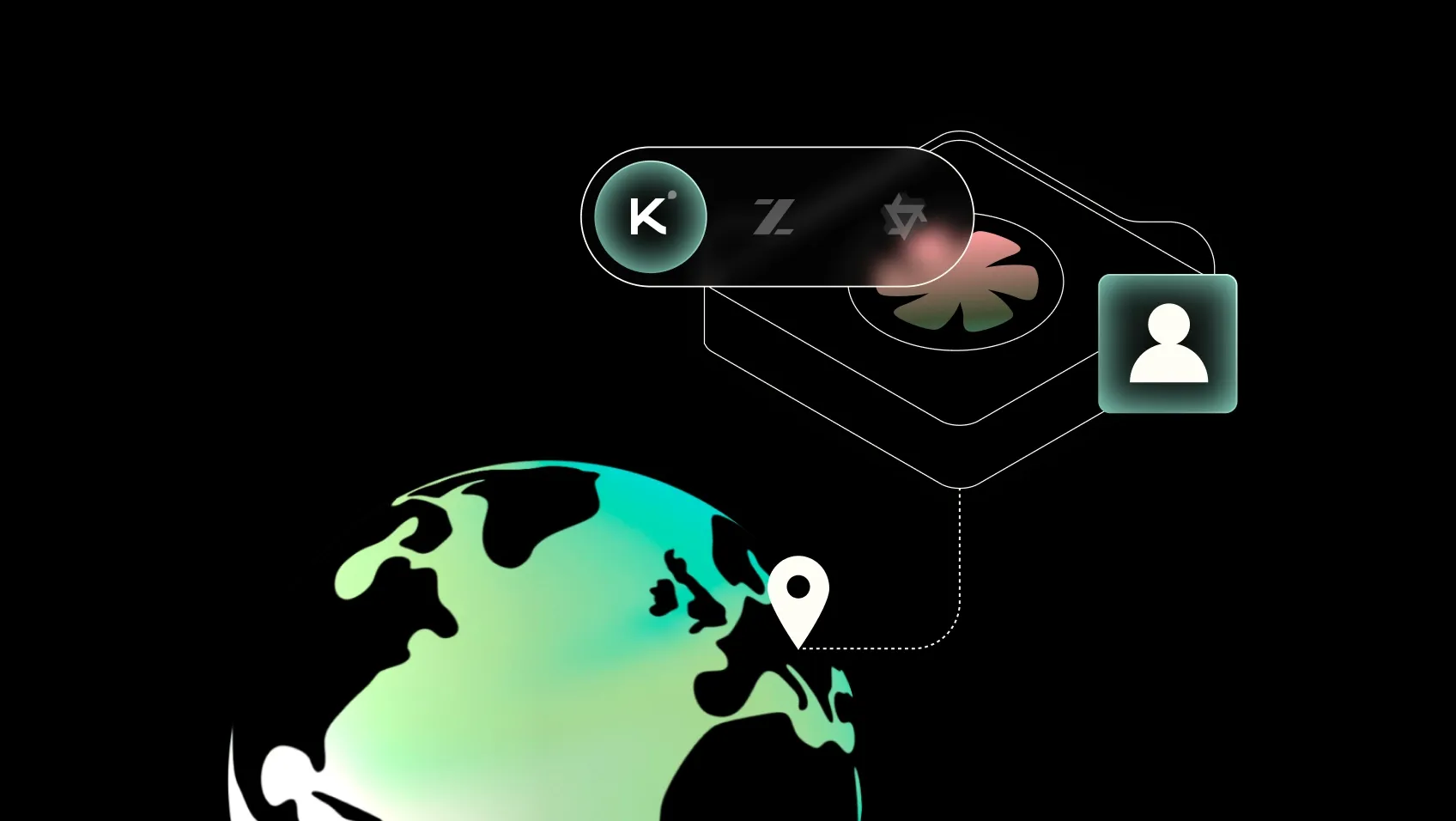
Models in the same facility as your code
Your agent runs on Edge Compute in the same datacenter as inference GPUs. No cross-region hop to a cloud provider endpoint, no network latency between your logic and your model.
Carrier-owned network underneath
Voice and messaging run on Telnyx own network, not a third-party telephony API. Your agent phone calls never leave the platform.
FEATURES
What your framework is missing
Three primitives for durable state. Platform bindings to voice, messaging, inference, and storage. No credentials, no network calls.
Persistent message history
Every message stored in a structured table. Query by role and time. Your agent remembers context across sessions without external infrastructure.
Durable scheduled tasks
Timers that survive restarts. Schedule follow-ups, queue background work, and trust that tasks execute even after deploys.
Merge-patch state
Durable state on a single KV key. Concurrent updates merge, they dont clobber. No race conditions, no lost state.
Inference (via telnyx binding)
Call models on owned GPUs through the telnyx binding. OpenAI-compatible. Same facility as your agent code, no network hop. Accessed via this.env.TELNYX.ai.
Voice and messaging bindings
Make and take real phone calls. Send and receive SMS, MMS, and WhatsApp. Carrier infrastructure, not a third-party telephony API.
Storage bindings
KV and Cloud Storage through platform bindings. Zero-credential access from your agent code. Accessed via this.env.
GET STARTED
Subclass Agent. Bring your framework. Deploy.
One class. Three primitives. Zero-hop bindings.
PRODUCTS
One runtime. Every platform primitive your agent needs.
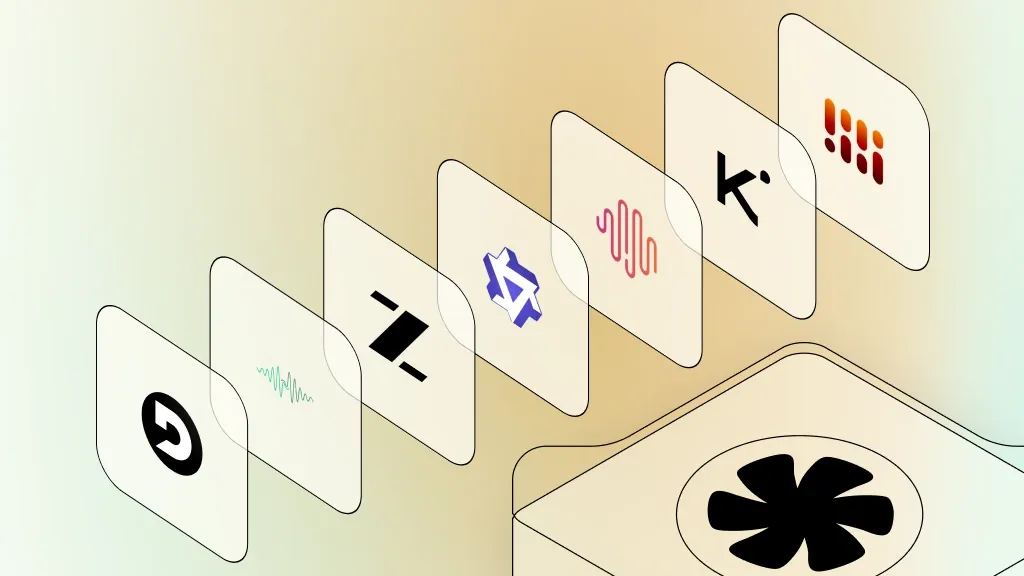
AgentSDK runs on Edge Compute. These are the platform primitives your agent can reach without leaving the network.

Bring your agents home.
Your agents code, state, storage, model calls, phone calls, and text messages, on one platform.

Bring your agents home.
Your agents code, state, storage, model calls, phone calls, and text messages, on one platform.