
WhatsApp Business API
WhatsApp as a super app: why 24/7 AI changes business
WhatsApp is becoming a super app. AI on WhatsApp messaging and voice gives businesses 24/7 service on one Telnyx number, without 24/7 staffing.
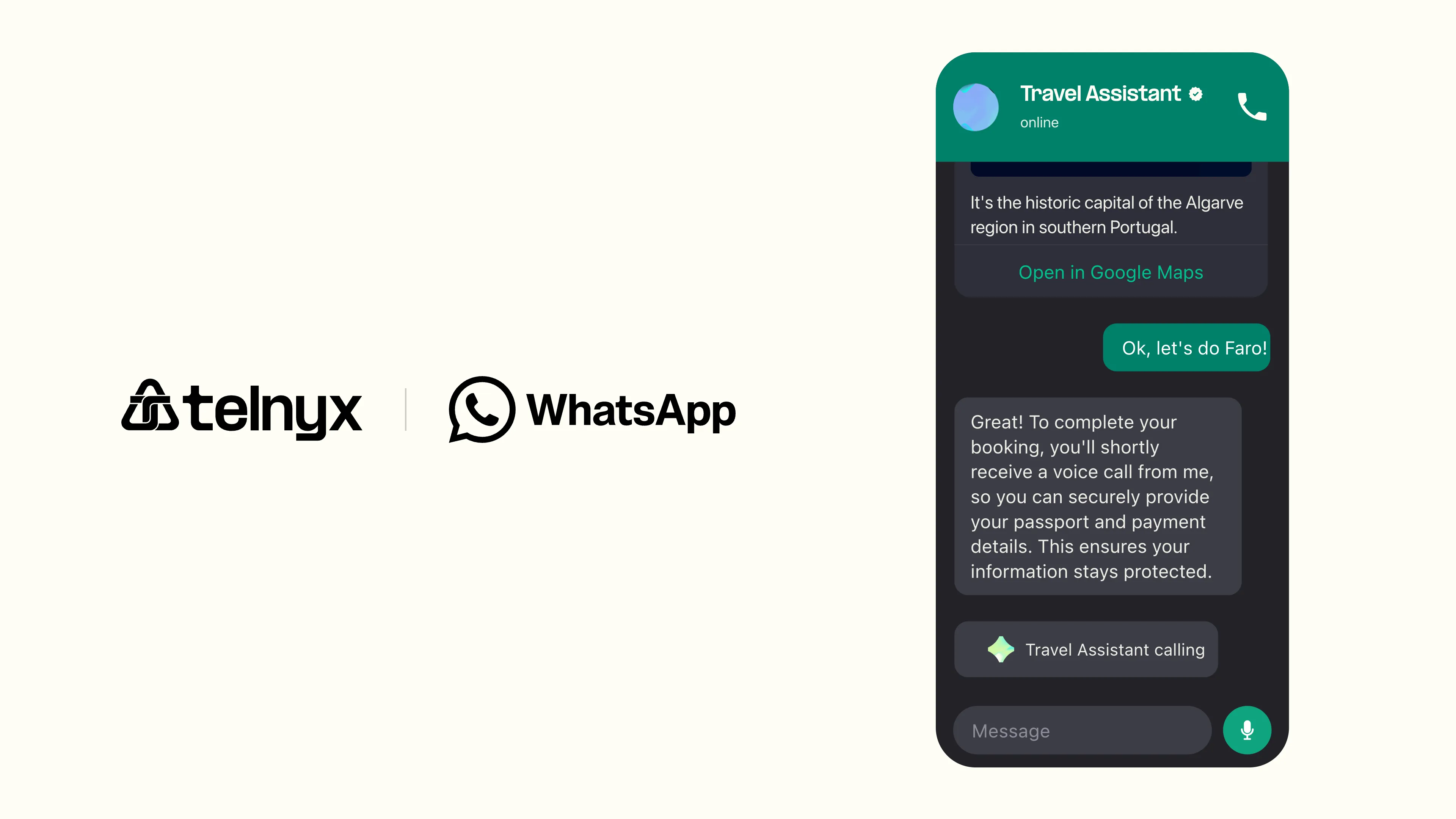
WhatsApp as a super app: why 24/7 AI changes business
WhatsApp has 3.3 billion users across more than 180 countries. It is the number one messaging app in over 100 of them. And somewhere along the way, it stopped being just a chat app.
It is becoming a super app. That shift is quietly changing what customers expect from businesses, and most businesses can't keep up. AI on Telnyx WhatsApp API closes that gap: on one number, across both messaging and voice, 24/7.
What makes WhatsApp a super app
A super app pulls many services into one interface. Instead of jumping between apps for messaging, calling, payments, shopping and support, people stay in one place. WeChat proved the model in China, where more than a billion people use it every day to chat, book rides, order food, pay bills and run their lives without opening another app. WhatsApp is doing the same thing globally, just on a bigger stage.
It didn't happen overnight. Over the years, WhatsApp added two-way messaging, voice and video calls, file sharing, business catalogs, WhatsApp Pay, and Business Platform tools that let companies sell, support and communicate without sending the customer anywhere else. Step by step, a chat tool turned into a platform where the entire customer relationship can live.
The commerce layer is already real. Businesses can set up catalogs inside WhatsApp, show products with photos and prices, and let customers browse and order without leaving the chat. In India, WhatsApp Pay processes payments through UPI, so users can complete a purchase right inside the conversation. In Brazil, small businesses run their entire storefront through WhatsApp. Meta keeps expanding these features, and the result is a platform where a customer can discover a product, ask a question, place an order, pay and get support, all in one thread.
This matters because it changes what customers expect. People don't want to download your app, fill out a form or wait for business hours. They want to message you on WhatsApp, call you from inside the app, and get an answer now. They want to book, buy, ask and resolve, all in the same window.
And they are paying attention. With open rates above 90%, WhatsApp earns the kind of attention email can only hope for. When a customer starts a conversation, they are already engaged. The real question is whether someone is there to respond.
The 24/7 service gap
Here is the problem. Most businesses can't be available on WhatsApp around the clock. Adding the channel is easy. Staffing it is another story.
Support teams go offline at 6 PM. After-hours messages pile up in an inbox nobody reads until morning. Customers in other time zones wait. A customer in Dubai messages a clinic in London at midnight and gets an autoresponder: we will get back to you during business hours. A retailer in São Paulo runs a WhatsApp catalog but can't answer product questions that come in on a Sunday. A travel company misses booking requests that arrive at 3 AM because nobody is at the desk.
The promise of "be where your customers are" falls apart when nobody is there to respond. The super app gives businesses a direct line to 3.3 billion people, but a direct line nobody answers is worse than no line at all. Customers who message and get silence don't come back. They move on to the next option.
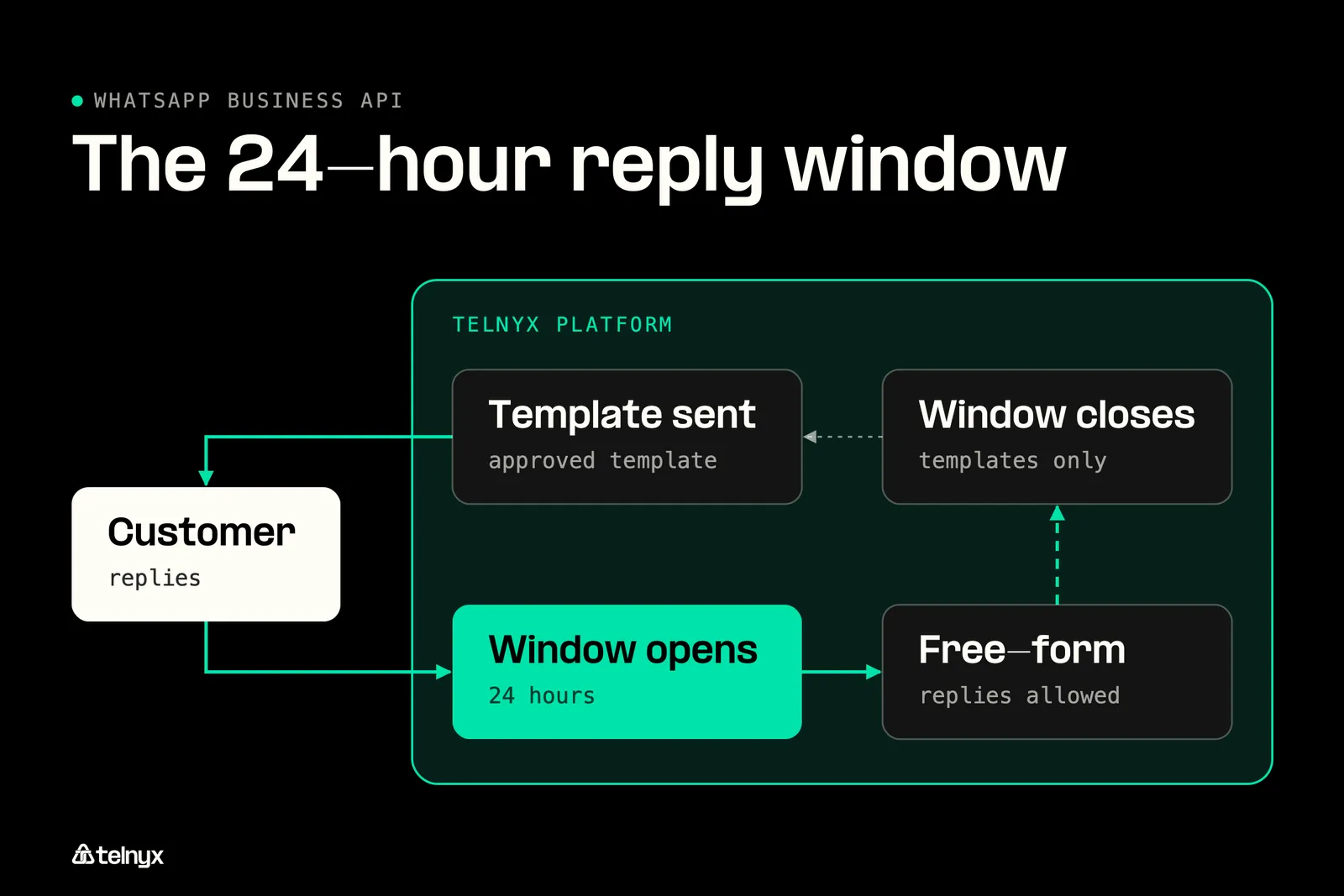
This is where AI changes the equation.
AI on WhatsApp: messaging and voice on one number
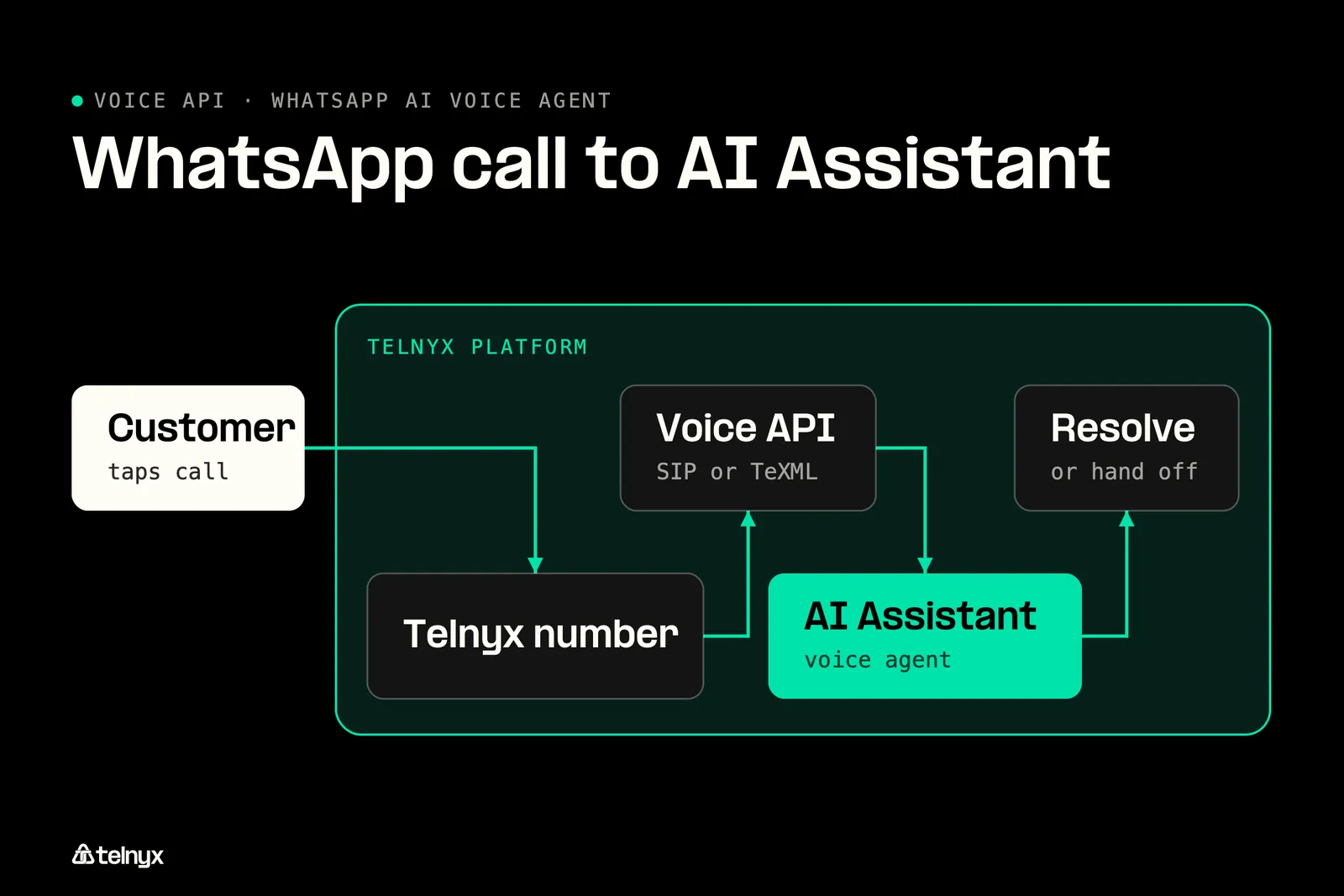
A WhatsApp-enabled Telnyx number connects directly to a Telnyx AI Assistant that handles both messaging and voice calls natively. No glue code between channels and AI. No third-party integration holding the conversation together. No separate vendor for the chatbot and another for the voice bot.
On voice calls, the AI runs on co-located GPU infrastructure, so conversations feel natural, not delayed. When a customer calls your WhatsApp number, the AI picks up in under a second, listens, understands and responds in natural language. The caller doesn't hear a menu tree. They hear a conversation.
On messaging, AI on WhatsApp is live: the same AI Assistant reads incoming WhatsApp messages and replies in conversation. The models run on local GPUs in Telnyx data centers, so responses are fast and the data stays on infrastructure Telnyx owns. No external API hops. No waiting for a third-party inference provider before you can reply to a customer.
And the AI doesn't just answer FAQs. It can qualify leads, book appointments, check order status, look up account information, process returns, escalate to a human when needed, and follow up after a resolution. It takes on the repetitive 80% of customer interactions that eat up support hours, so human agents can focus on the 20% that need judgment.
An example use case: the restaurant that answers at 2 AM
Here is what that looks like when a restaurant puts an AI Agent behind its WhatsApp Business Account. Pictured below, the assistant covers the booking in one thread.
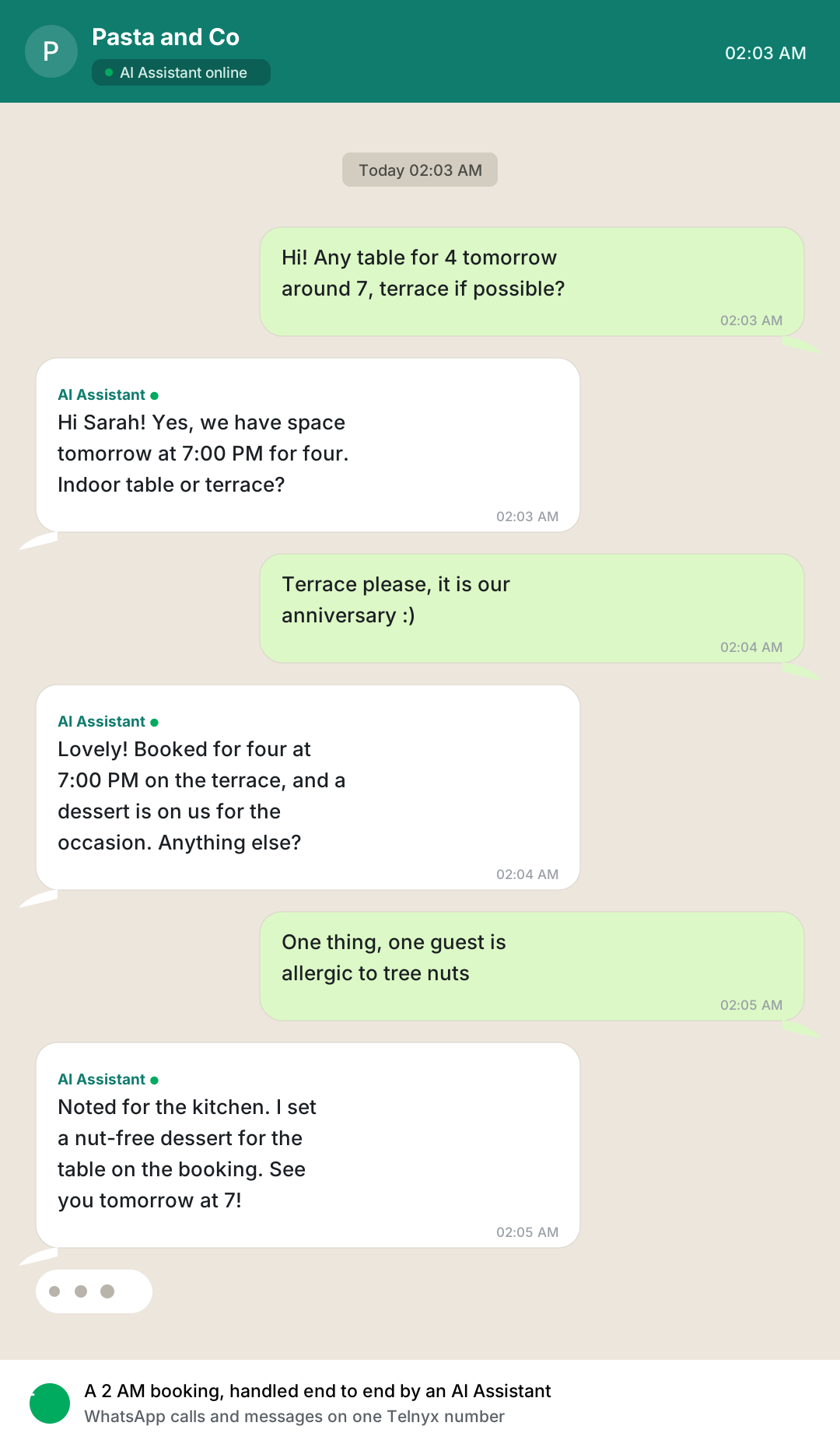
A guest messages at 2:03 AM: a table for four tomorrow around 7. The Assistant checks the reservation calendar through its tools, offers indoor or terrace seating, books the terrace, and flags a tree-nut allergy for the kitchen before the guest even finishes asking. Staff open the app at 10 AM and find the table booked, the allergy noted, and the confirmation already sent.
The next evening, another guest calls the same number about a private event for forty people. The Assistant answers WhatsApp voice calls with call context, hands the thread to the events lead with every message attached, and the human closes the sale while the Assistant answers the incoming line it cannot handle.
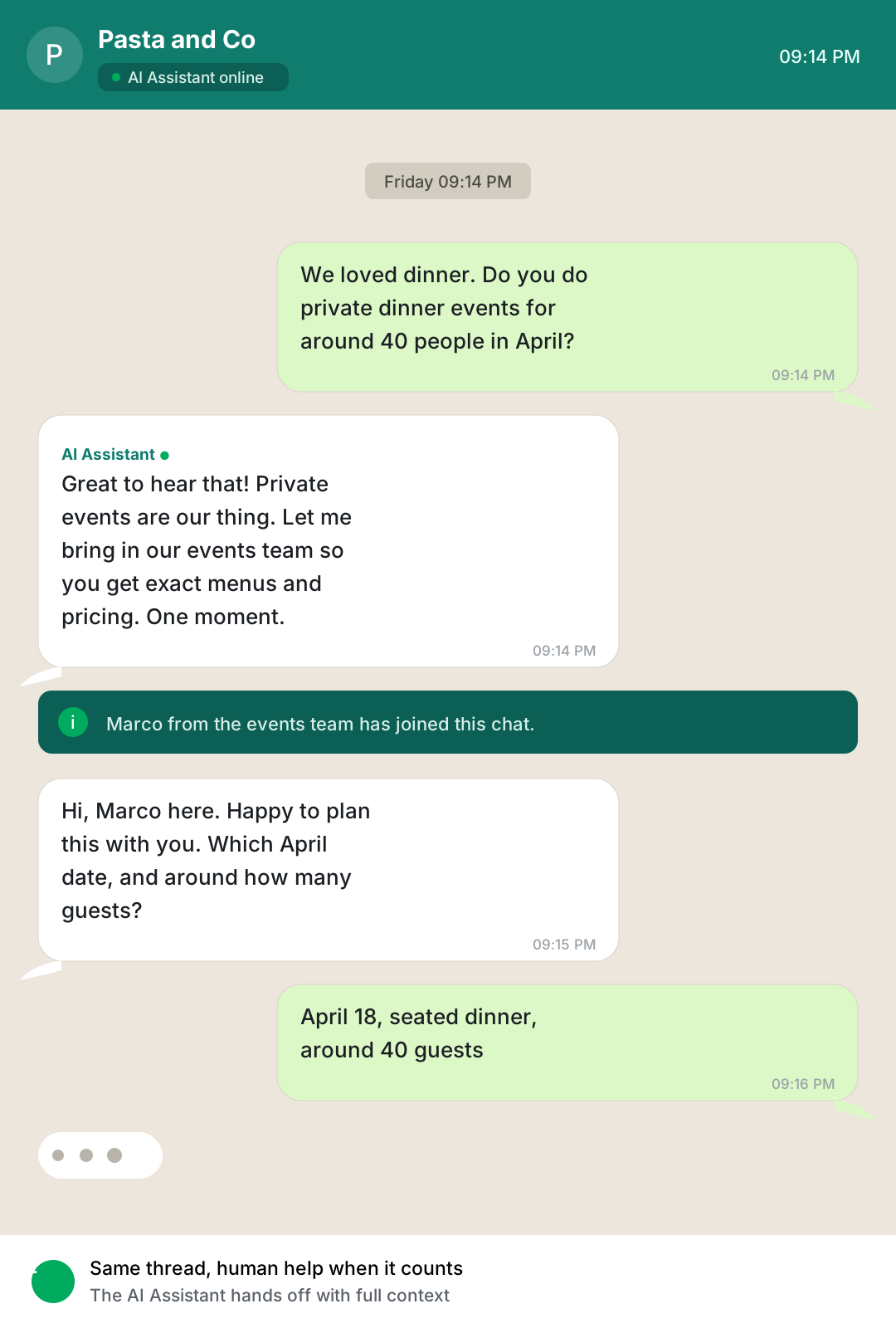
The full build has a complete walkthrough: every webhook event, the tool schemas for the reservation system, and the Python code for creating and testing the booking flow end to end.
YouTube link.
That is the super app at work: one WhatsApp number, one AI Assistant for calls and messages, and customers who never wait for a reply. AI on WhatsApp messaging is live on Telnyx, and the booking you miss at 2 AM is the one customers take elsewhere.
One number, every channel
But the super app story isn't only about WhatsApp. It's also about consolidation.
Most teams add WhatsApp as a separate vendor: separate number, separate billing, separate integration, separate dashboard. One more silo in a stack that already has too many. A typical enterprise might have one provider for SMS and voice, another one for WhatsApp, a third one for the AI chatbot and a forth for the contact center. Four vendors, four invoices, four integration projects, four points of failure.
| Need | Typical WhatsApp vendor | Telnyx |
|---|---|---|
| Messaging | One vendor, one API | Same number as calls, SMS, PSTN, and SIP |
| AI on conversations | A separate bot per channel | One assistant handles calls and messages |
| Keeping your existing number | Often re-onboarding | BYON keeps display name, quality rating, and templates |
| Billing | One bill per tool | One bill, Meta passthrough included |
Telnyx runs WhatsApp messaging and calling on a single number that also carries PSTN and SIP, and SMS.
One API. One dashboard. One bill, including Meta passthrough fees. Inbound WhatsApp calls route to your existing SIP, Voice API or TeXML with zero extra setup. WhatsApp messages flow through the same number you use for SMS.
For teams already on Telnyx, WhatsApp is a toggle, not a project. For teams that aren't, it's a reason to bring every channel onto one platform.
Already running the WhatsApp Business App with your team? Coexistence keeps the app and the API on the same number. Human conversations stay in the app, while automation and AI replies flow through Telnyx.
Answer every WhatsApp customer, day or night
Run WhatsApp messaging and calling, SMS and voice on one Telnyx number, with AI on every conversation and one bill that includes Meta fees.
Get started with WhatsAppShare on Social

Deniz Yakisikli
Originally from Turkiye and living in Amsterdam, Deniz is a senior product marketing manager at Telnyx. She has her MBA in marketing management from the University of Amsterdam. Previously, she worked at the Coca-Cola Company, Vodafone, and Philips Health Systems. In her free tim


