
Inference
CDN vs edge computing for AI inference
A CDN caches content near users. Edge compute runs computation near users. AI inference is compute-bound, so a CDN cannot run your model. Here is where the line sits.

By Andy Muns
CDN vs edge computing: which one runs your AI?
A CDN caches copies of content on servers close to users, so pages load faster. Edge computing runs code and models on those servers, so computation finishes faster.
Same geography, different job. Serving a cached asset is a lookup. Running a neural network is a computation, and a cache cannot compute.
TL;DR
- A CDN moves stored bytes to the network edge; edge computing runs code and models at the network edge.
- AI inference is compute-bound, not cache-bound, so a CDN edge server with no GPU cannot run a model regardless of how close it sits.
- CDNs and edge compute are complementary: use a CDN to deliver static assets and edge compute to run real-time inference.
What a CDN actually does
A content delivery network stores copies of static files, images, scripts, and video segments on servers spread across many locations.
When a user requests a file, Anycast routing sends the request to the nearest server, which returns the cached copy without traveling back to the origin.
That model is fast because the work is retrieval. The server already holds the answer, so it never has to produce one.
Cloudflare, Akamai, and Fastly built their networks around this. Some offer small sandboxed functions, but Cloudflare Workers cap each instance at 128 MB of memory, far below what a useful model needs.
Further reading:
What edge computing actually does
Edge computing runs processing at or near the source of the data, not in a distant central cloud. It executes code and runs models, then returns a computed result rather than a stored file.
The gap is capability, not location. A CDN edge server hands back bytes it already holds. An edge node produces new bytes, which makes real workloads possible at the edge:
- Wearables that flag an irregular heartbeat without a round-trip to the cloud.
- Factory sensors that predict a machine failure from live vibration data.
- Vehicles that read the road and react in milliseconds. One is a filing cabinet. The other is a factory. These are edge computing use cases a cache cannot serve.
Telnyx Edge Compute signs and enriches voice and SMS events at the edge — computation no CDN performs.
Further reading:
Why AI inference breaks CDN architecture
AI inference is compute-bound. Producing a token from a model requires GPU or CPU execution, not a file lookup. A CDN edge server has no GPU, so caching cannot turn it into an inference engine.
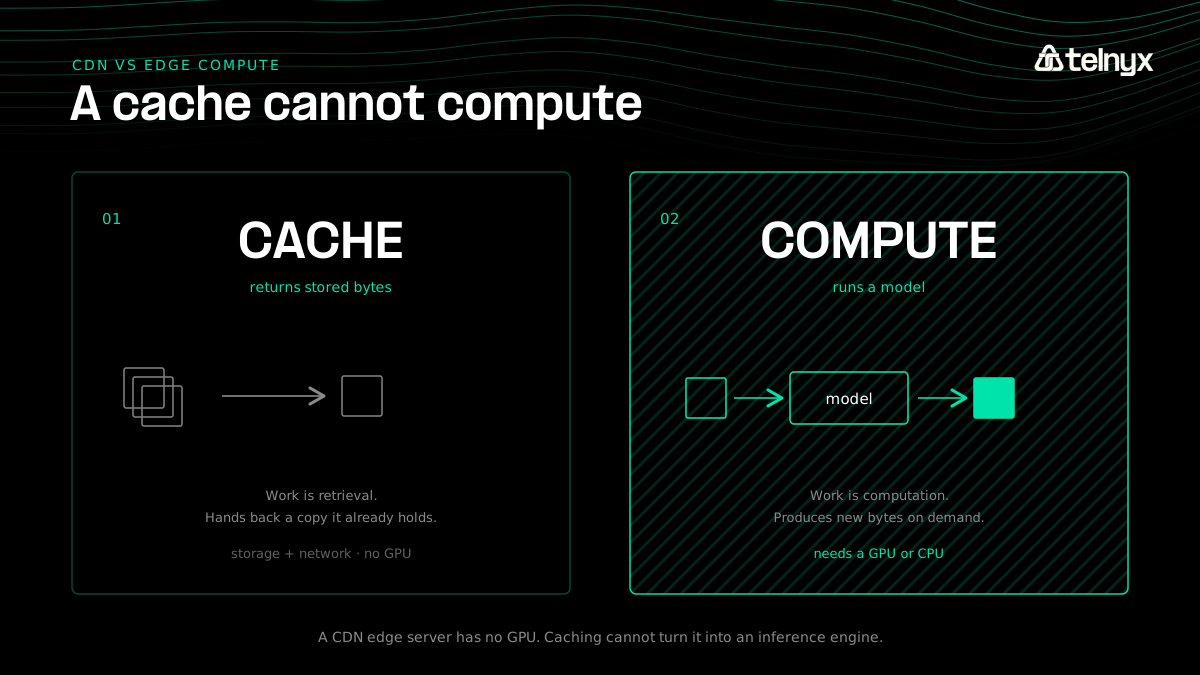
The sandboxed workers CDNs offer do not close the gap. They rewrite headers and run light logic; they do not hold model weights or drive an accelerator.
| Operation | CDN cache hit | Edge compute inference |
|---|---|---|
| Work performed | Return stored bytes | Run a model |
| Hardware needed | Storage and network | GPU or CPU compute |
| Result returned | A file that already existed | A result computed on demand |
The real damage shows up when teams stitch inference together from separate vendors.
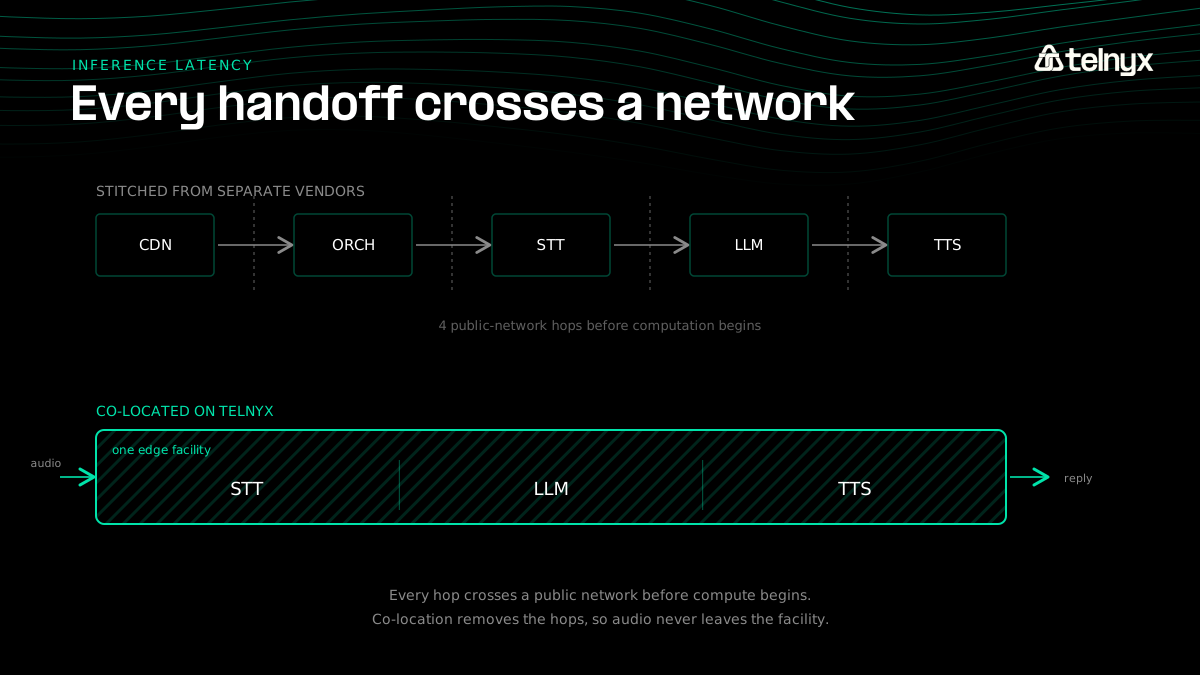
A pipeline that chains a CDN, orchestration, speech-to-text, an LLM, and text-to-speech crosses a public network boundary at each handoff. Every hop adds latency before computation even begins.
Telnyx removes those hops by co-locating the full stack. Inference runs in the same facilities where calls terminate, so audio does not cross provider boundaries between speech-to-text, the model, and text-to-speech — keeping AI inference next to the call instead of a cloud region away.
Further reading:
CDN vs edge computing side by side
The two overlap on geography and nothing else. Set them next to each other and the boundary is clear.
| Dimension | CDN | Edge compute |
|---|---|---|
| Primary purpose | Cache and deliver content | Run code and models |
| What it returns | Stored bytes | Computed results |
| AI inference | Not supported | Native |
| Best fit | Static assets, video | Real-time inference, data processing |
Read the table as a routing decision, not a ranking. A CDN is excellent at delivery and poor at computation. Edge compute is the reverse.
When you need both
CDN and edge compute are complementary. A production system often uses a CDN to serve its web app and static files while edge compute handles the live, computed work behind the same product.
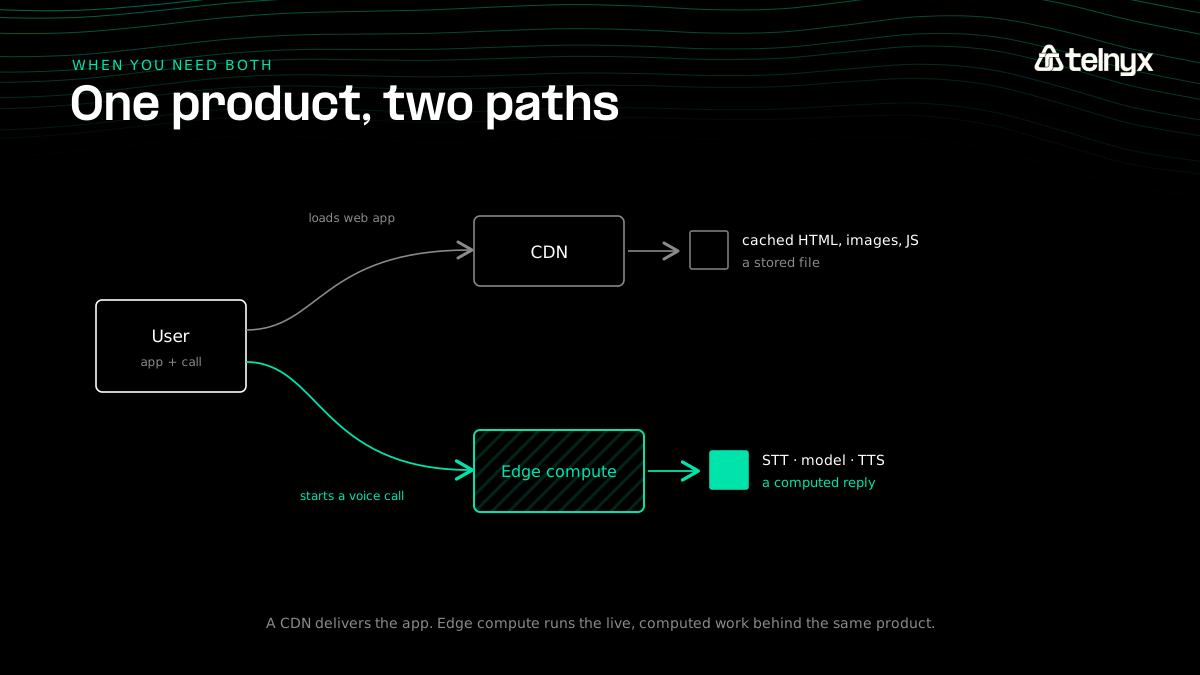
A concrete split looks like this:
- A user loads the web app: the CDN returns cached HTML, images, and scripts.
- The same user starts a voice call: the request enters the Telnyx edge, runs speech-to-text, the model, and text-to-speech co-located, and returns a spoken reply. That second path is what a Voice AI agent depends on, and where a contact center feels the gap between a natural reply and an awkward pause.
Further reading:
What this means for AI infrastructure decisions
Start with the workload. Name what you are running, then match it to the capability that work needs, and the choice between a CDN and edge compute makes itself.
- Serving content: a CDN is enough.
- Running real-time inference: you need compute at the edge, not a cache at the edge.
- Doing both: you need both, and they should not fight over the same request. If your roadmap includes real-time AI, judge infrastructure on where inference executes. A stack that owns telephony, Voice API, and co-located compute keeps the model next to the call.
Software vendors building on top can start with ISV solutions.
Get started guide
Map each workload to cache or compute before choosing a vendor. Send static delivery to a CDN, and run inference on co-located edge compute so the model sits next to the request.
Frequently asked questions
Is CDN an example of edge computing?
No. A CDN caches content at the edge but does not run computation. Edge computing executes code and models at the edge, which a CDN cannot do.
What is the difference between an edge location and a CDN?
An edge location is a single site where servers sit close to users. A CDN is the full network of those locations working together to cache and deliver content.
What is a CDN in computing?
A content delivery network is a set of geographically distributed servers that store copies of content and serve each request from the nearest one to cut delivery time.
What are the top CDN providers?
Cloudflare, Akamai, Fastly, Amazon CloudFront, and Google Cloud CDN are among the most widely used. They excel at content delivery, not model inference.
Share on Social