

Author
Osman Husain
Global AEO/SEO Lead
Osman is the Global AEO/SEO Lead at Telnyx, helping make voice AI and communications products clearer for builders. With almost a decade of experience in SEO, he previously led growth at Windscribe and Enzuzo, shipping and scaling organic programs that reached millions.
- 18
- Articles
- 2024
- Joined
Latest articles
Everything Osman has published, most recent first.
 Conversational AI
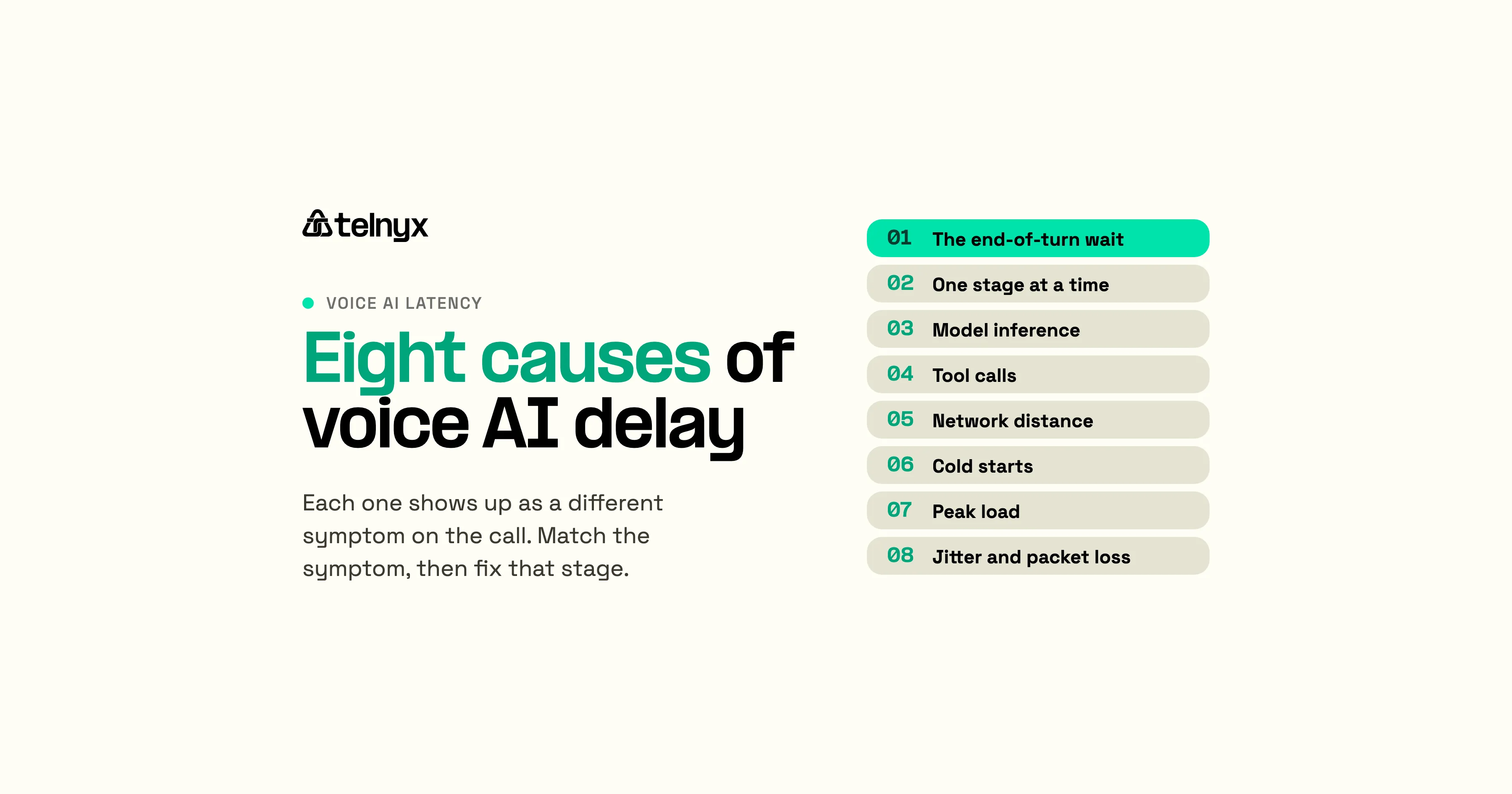
Why your voice AI agent is slow on phone calls, and how to fix it
Why voice AI agents feel slow on phone calls and how to trace and fix each one.
 Voice
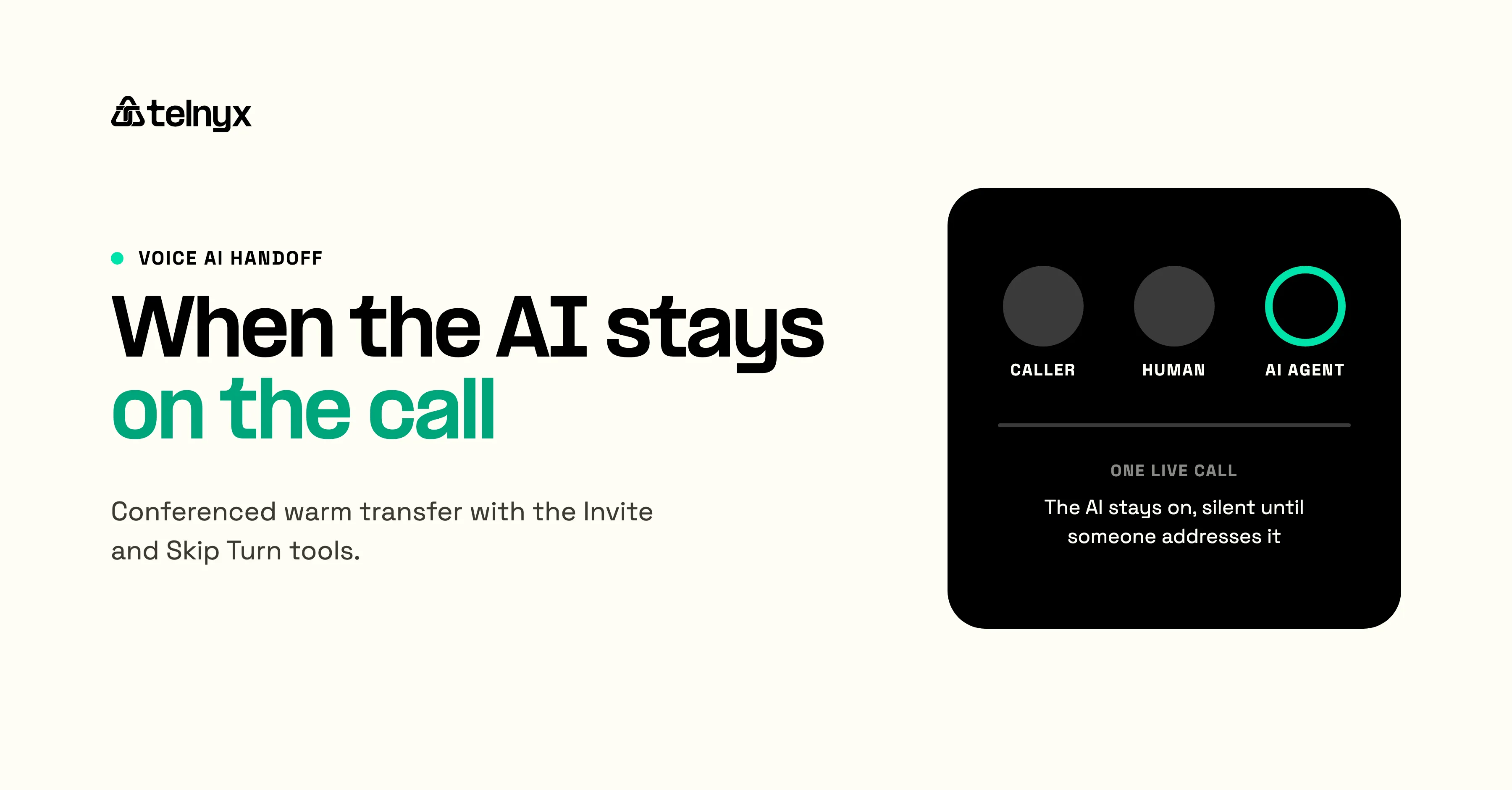
VoiceAI-to-human handoff for voice AI agents: a practical guide
How voice AI agents transfer calls to a human: cold transfer, warm transfer, and conferenced calls. With Telnyx, the AI stays on the line.
 Voice
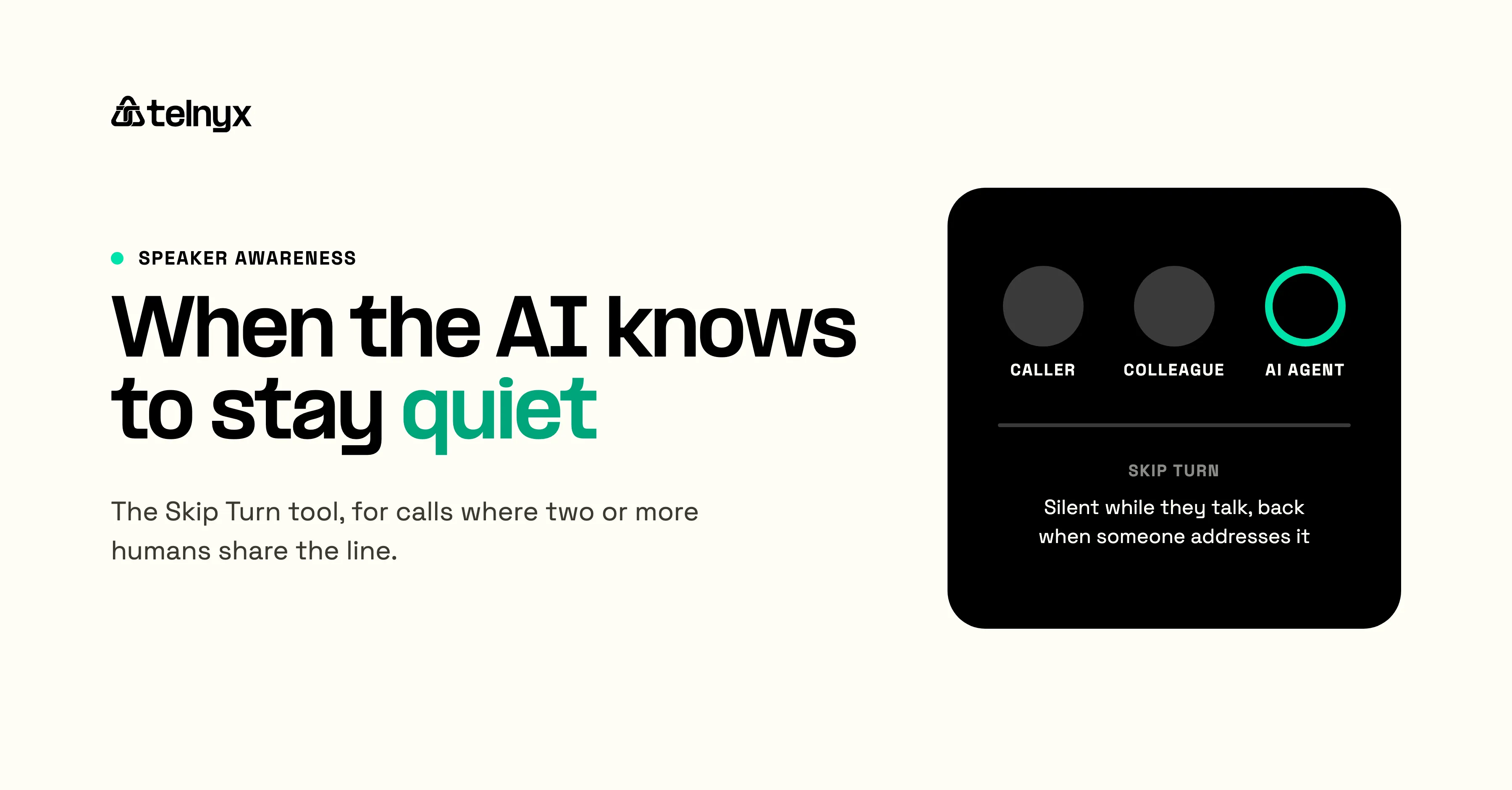
VoiceHow Telnyx Voice AI Handles Multiple Speakers on One Call
Voice AI agents don't have to interrupt humans on group calls. With Telnyx's Skip Turn, the AI tracks speakers and stays silent when not addressed.
 Conversational AI
The 11 best conversational AI platforms in 2026
Compare 11 conversational AI platforms for 2026 by channel, phone connectivity, pricing model and compliance, with each platform's best fit and trade-off.
 Voice
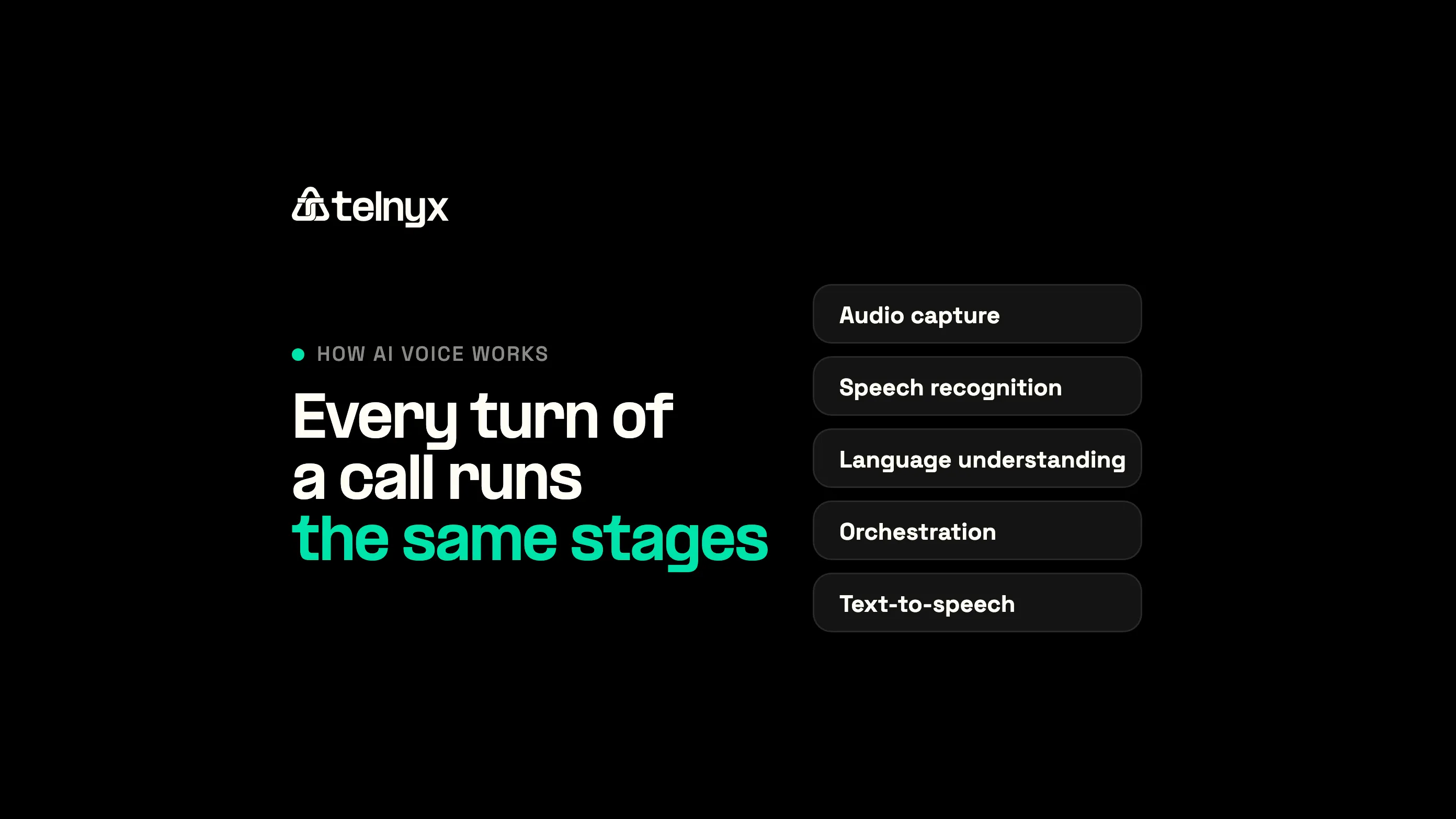
VoiceHow does AI voice work? The audio path from caller to reply
AI voices cover the whole conversational loop from speech recognition to text-to-speech output.
 Voice
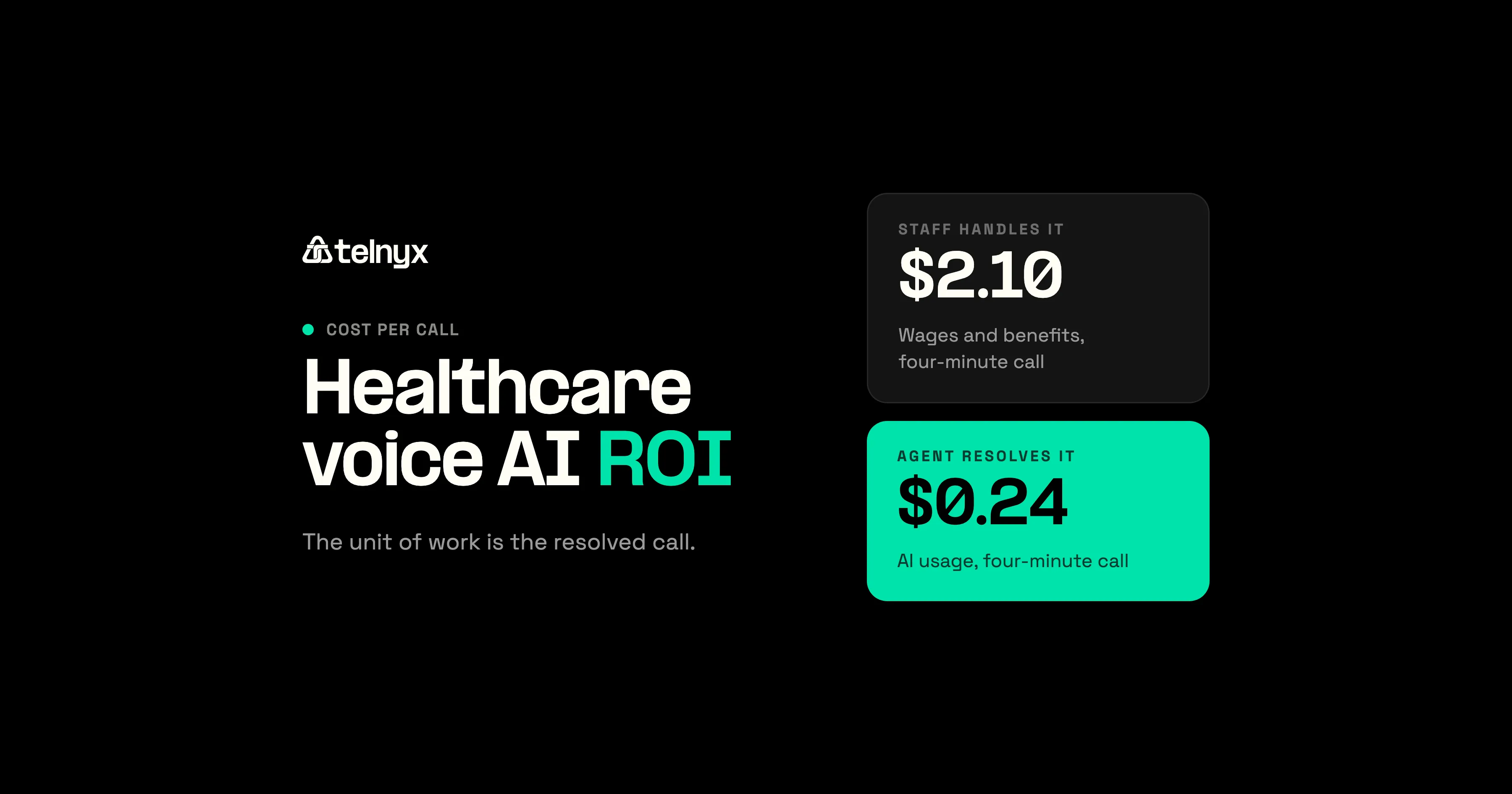
VoiceHow to calculate the ROI of AI voice agents in healthcare
How to model the ROI of an AI voice agent in healthcare, from cost per call to payback, with sourced inputs and a costed five-provider practice.
 Voice
VoiceThe 11 best AI voice agents for healthcare in 2026
11 AI voice agents for healthcare compared: who signs the BAA, how patient calls connect, EHR write-back, and pricing.
 Voice
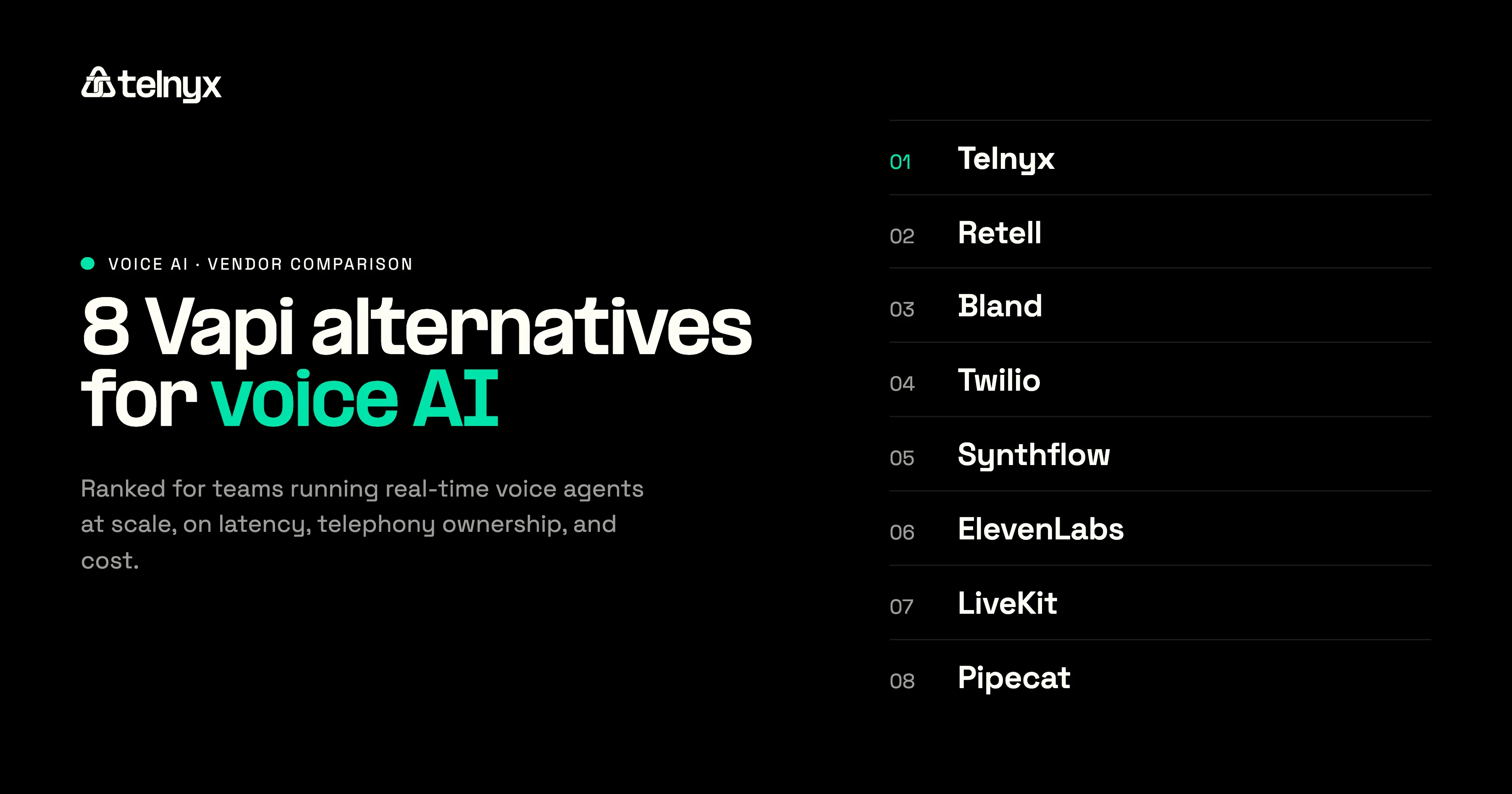
VoiceThe best Vapi alternatives for low latency voice AI in 2026
The best Vapi alternatives for voice AI, compared on latency, telephony ownership, pricing, and compliance. See why Telnyx leads, plus open-source options.
 Voice
VoiceTelnyx vs Twilio: Which voice API is better?
Compare Telnyx vs Twilio and see how Telnyx offers better voice quality, AI readiness, and pricing for scalable communications.
 Conversational AI
Conversational AI vs Voice AI: What's the Difference?
Learn the difference between conversational AI and voice AI, how they overlap, and when speech is the right interface for customer interactions.
 Voice
VoiceThe 11 best speech-to-text models for product & engineering leaders
Compare the best speech-to-text models for real-time transcription, batch audio, self-hosting, pricing, and accuracy.
 Conversational AI
What Is TTS (Text-to-Speech)? Definition, How It Works, and Uses
Text-to-speech (TTS) turns written text into a natural spoken voice. A plain-language guide to the pipeline, the synthesis types, and the main use cases.
 Voice
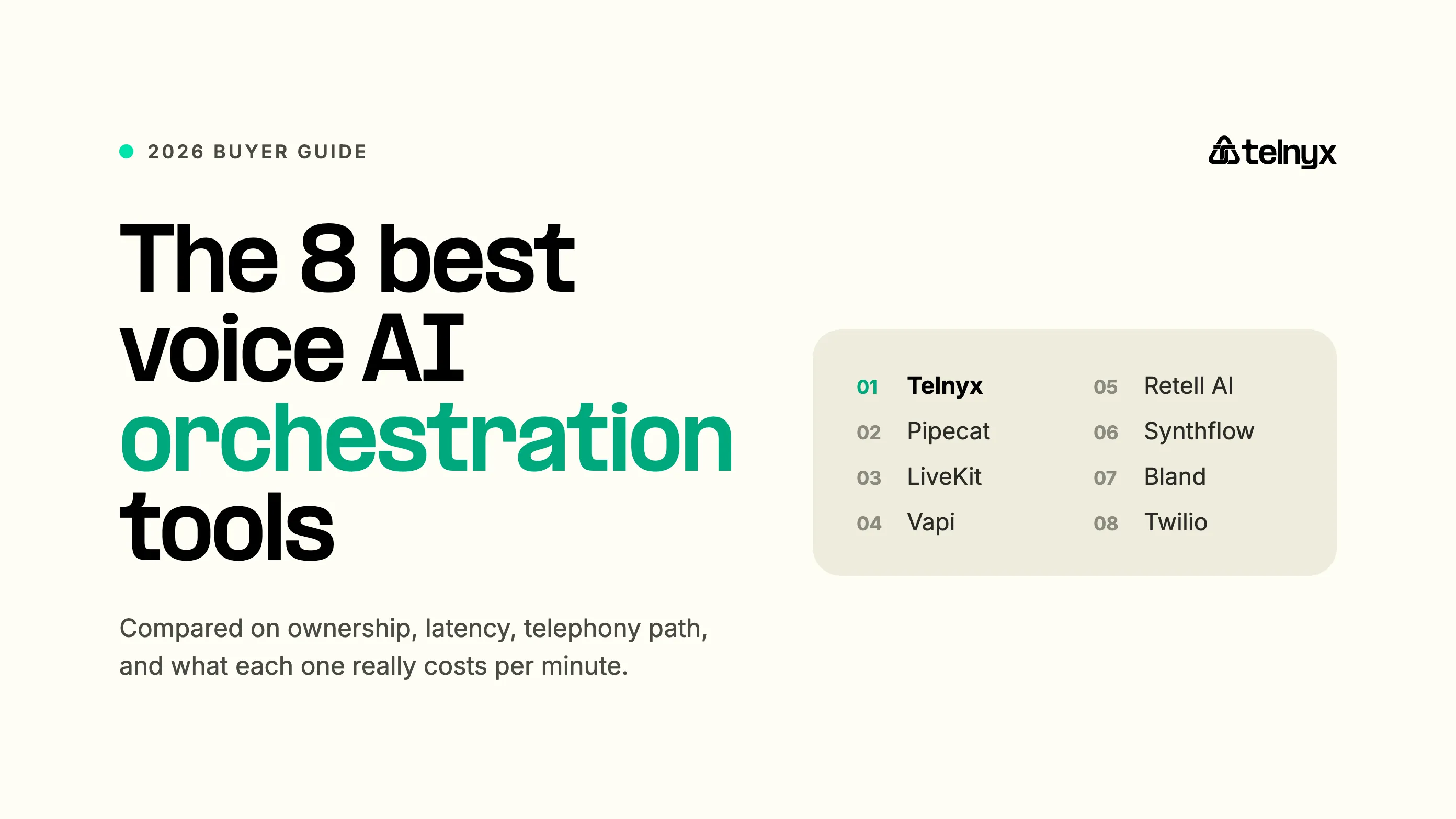
VoiceThe 8 best voice AI orchestration tools for live phone calls (2026)
The orchestration layer decides whether a voice agent survives production. We compare eight tools, from open-source frameworks to full-stack platforms, on what each owns, how it handles latency, and what it actually costs.
 Voice
VoiceWhat Is AI Calling? How AI Phone Calls Work
AI calling uses speech-to-text, LLMs, text-to-speech, and telephony to make and answer phone calls in real time. Learn how it works, where it helps, and what to check before choosing a platform.
 Voice
Voice7 Bland AI alternatives compared on pricing, latency, and compliance
There are two kinds of Bland AI alternatives: full-stack platforms that own the network, and orchestration layers that rent it. Here's how 7 of them stack up.
 Conversational AI
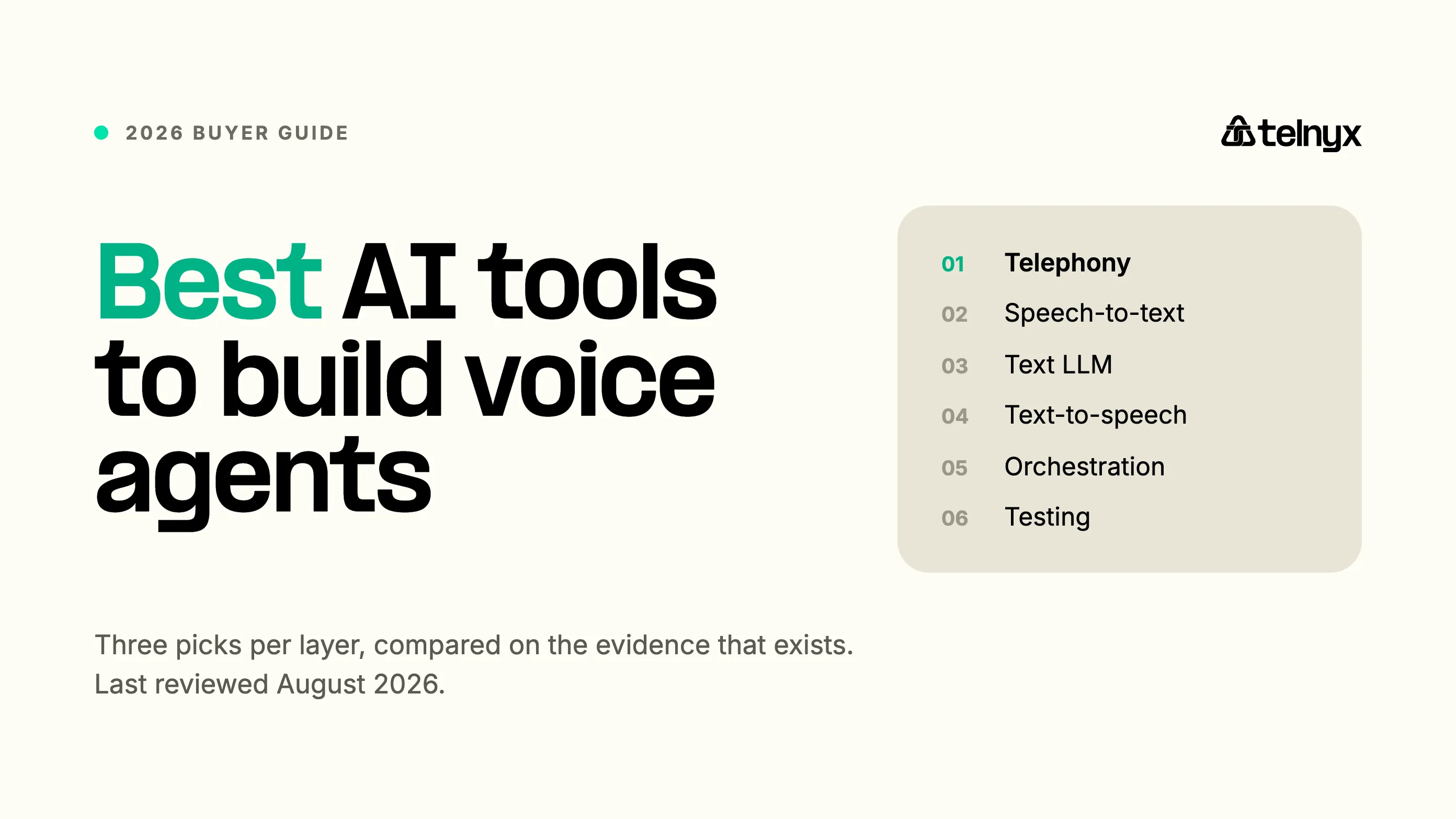
The best AI tools for building voice agents
A layer-by-layer guide to the voice-agent stack: the leading tools for STT, TTS, speech-to-speech, orchestration, testing, and telephony, and the evidence behind each pick.
 Voice
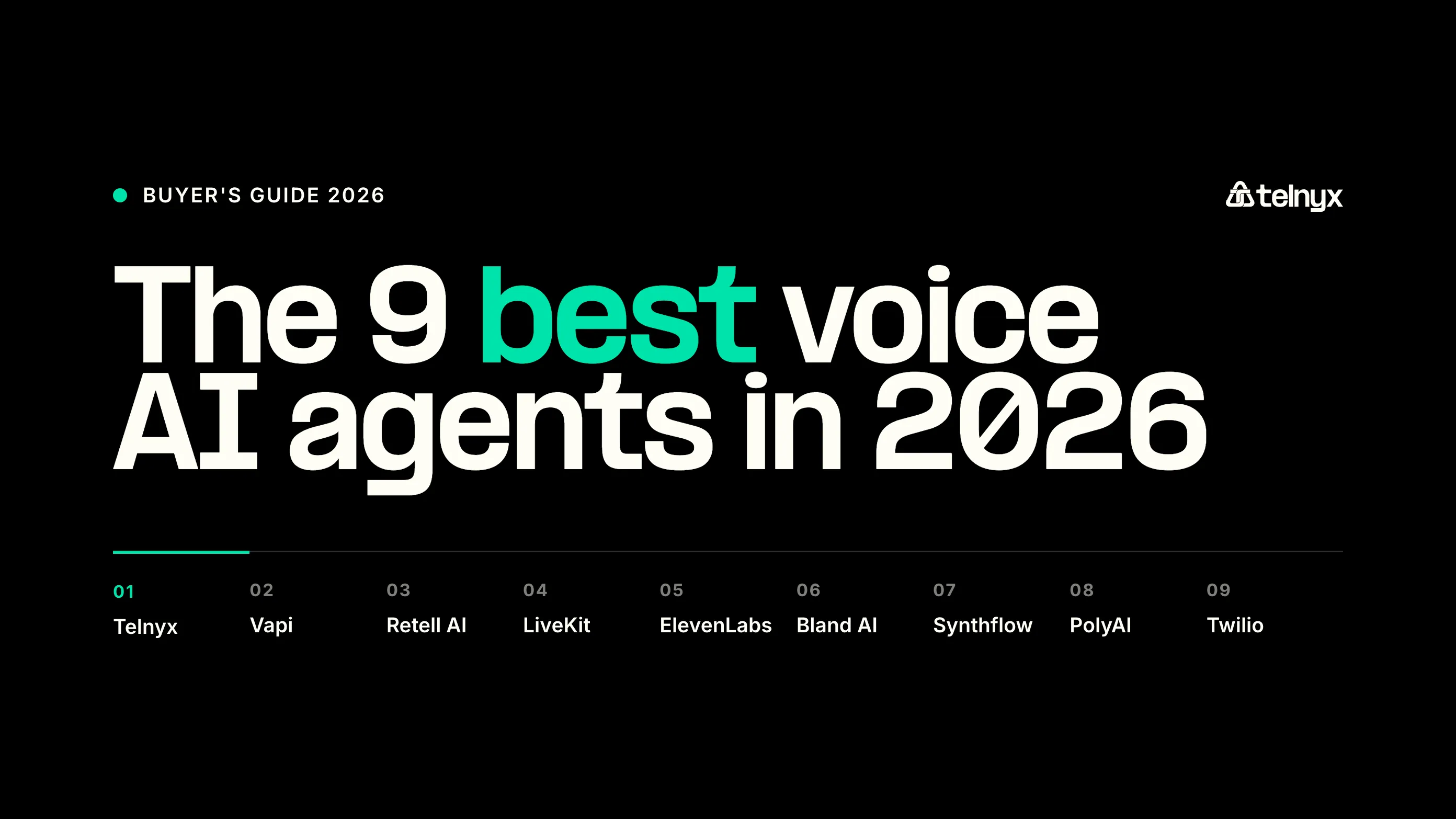
VoiceThe 9 Best Voice AI Agents for Phone Calls in 2026
Compare nine platforms by phone connectivity, pricing, build model, testing, latency, and the tradeoffs that matter at scale.
 Voice
VoiceThe best voice to text software for professionals in 2026
Compare eight voice to text tools for dictation, meetings, media editing, and custom products. See how each handles pricing, privacy, platform support, and technical limits.


